
Best Solar Panel Installers NZ (2026)
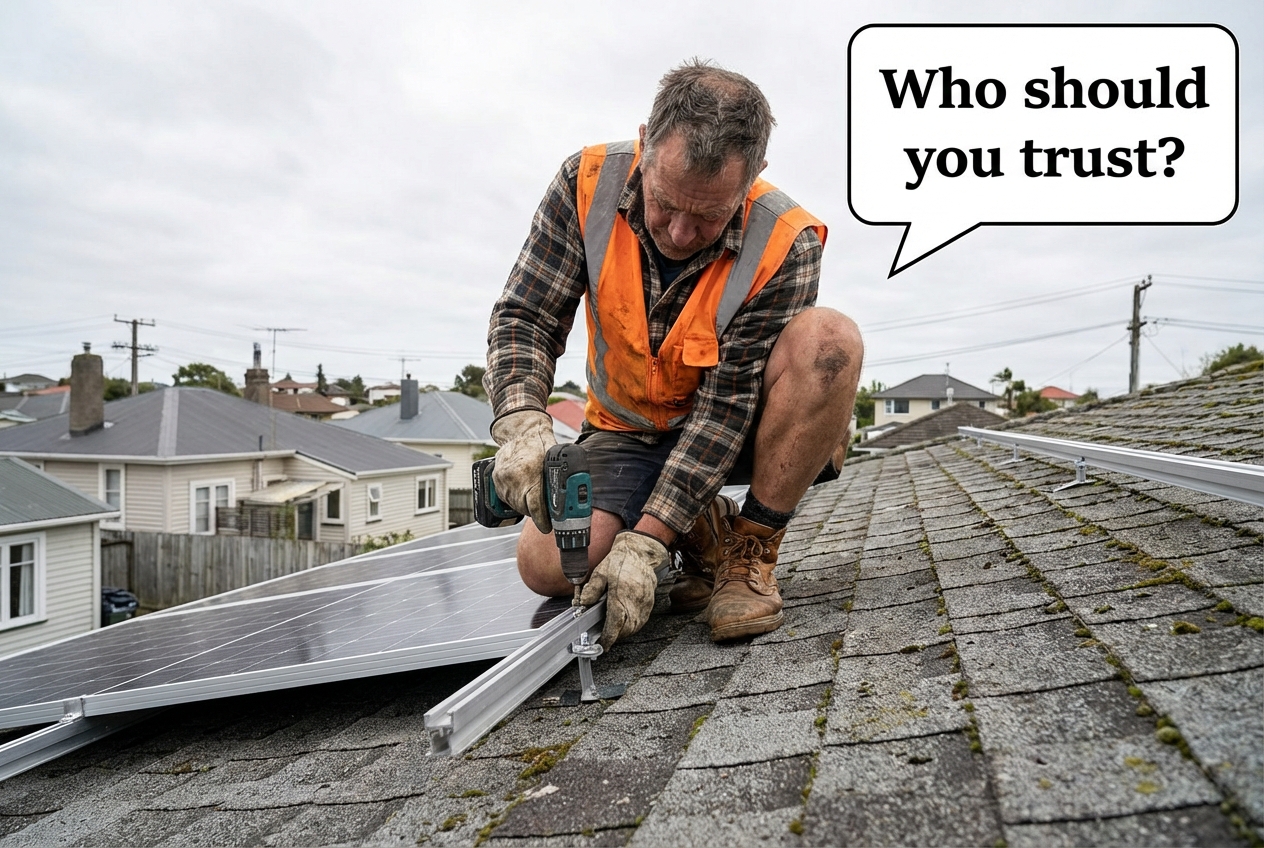
Choosing a solar installer in New Zealand is one of the most important decisions you’ll make in the process. The panels matter, the inverter matters, but the installer determines whether the whole thing comes together properly or becomes a 25-year headache bolted to your roof.
SolarScout matches you with vetted, SEANZ-accredited installers in your area. Take the 2-minute quiz to get personalised quotes.
Key Takeaways
Five things to know before you start
- SEANZ membership is non-negotiable if you want access to green loans at 0 to 1% interest from NZ’s major banks.
- Get three quotes minimum. Compare them on price per watt ($/W), not just the total price. The recommended range is $1.60 to $2.20/W for a quality Tier 1 system.
- Insist on a written workmanship warranty of at least 5 years, separate from the panel and inverter manufacturer warranties.
- Check credentials yourself. Verify SEANZ membership, registered electrician status (EWRB), and company registration. Takes five minutes.
- If a quote looks too good to be true, it probably is. Unusually cheap systems often mean low-quality panels, poor mounting, or no after-sales support.
What Makes a Good Solar Installer?
Solar is a long-term investment. You’re paying $10,000 to $20,000+ for a system that should last 25 years or more. The installer you choose determines whether that investment pays off or becomes an expensive headache.
Unlike buying a TV or a car, you can’t easily “return” a solar installation. Once it’s on your roof, switching installers means starting from scratch. So getting it right the first time matters.
The non-negotiables
These aren’t nice-to-haves. These are the baseline for any installer you should consider.
- SEANZ membership. More on this below, but it’s the single most important credential for your financing options.
- Registered electrician. This is legally required in NZ. All electrical work must be done by a licensed professional registered with the Electrical Workers Registration Board (EWRB).
- Written workmanship warranty. Minimum 5 years. This covers the installation work itself, separate from the panel and inverter warranties.
- Tier 1 panels. Panels from manufacturers rated Tier 1 by Bloomberg New Energy Finance. Jinko, LONGi, Trina, Canadian Solar, and REC are all common in NZ.
- Quality inverter brands. Fronius, Enphase, and SolarEdge are the three most common quality brands in the NZ market. Each has trade-offs, but all are reputable.
- Professional indemnity insurance. Protects you if something goes wrong due to the installer’s work.
The good signs
Beyond the basics, here are the indicators that separate a solid installer from a great one.
- Master Electricians NZ membership. Not required, but it’s an additional quality signal. Members are audited regularly and carry additional guarantees.
- Happy to show past work. Good installers will share photos of recent installations and connect you with previous customers for references.
- Provides itemised quotes. Every component listed by brand, model, quantity, and individual price. Not a single lump sum with no detail.
- Takes time to educate you. They explain how the system works, what you can expect in terms of generation, and what the limitations are. No overselling.
- Handles network connection applications. A good installer manages the paperwork for connecting your system to the grid, including the application to your local electricity distributor.
The installer you choose matters more than the panels. A great installer with good panels will outperform a bad installer with premium panels every time.
The SEANZ Question (Why It Matters for Your Loan)
SEANZ (the Sustainable Energy Association of New Zealand) is the premier trade organisation for the renewable energy industry in NZ. They set standards, provide training, and maintain a code of conduct for members.
But here’s the bit most people don’t realise until they’re filling out loan paperwork.
All major NZ banks require SEANZ membership for green loan eligibility. Choose a non-SEANZ installer, and you could be locked out of 0 to 1% interest rates.
Westpac, ANZ, ASB, BNZ, and Kiwibank all offer green loans or sustainable energy financing with preferential interest rates. The typical range is 0 to 1% for solar installations. On a $15,000 system, that’s a saving of $2,000 to $4,000 in interest over the loan term compared to a standard personal loan at 8 to 12%.
The catch? The banks require your installer to be a SEANZ member. It’s their quality assurance mechanism. If your installer isn’t a member, you may still be able to get a loan, but it will be at standard personal loan rates. That changes the maths on your payback period significantly.
What SEANZ membership means in practice
- Compliance with AS/NZS 5033. This is the Australian/New Zealand standard for installation and safety requirements of photovoltaic arrays.
- Honest advertising requirements. Members agree not to make misleading claims about system performance or savings.
- Formal complaints process. If something goes wrong, SEANZ provides a resolution pathway. Without it, your only option is the Disputes Tribunal or a lawyer.
- Ongoing professional development. Members are expected to stay current with technology changes, safety standards, and best practices.
Not every installer is a SEANZ member. Some smaller operators, particularly newer businesses, may not have joined yet. That doesn’t automatically make them bad. But it does mean you won’t qualify for the best financing, and you lose that additional layer of accountability.
Our recommendation: make SEANZ membership your first filter. You can check membership status directly on the SEANZ website.
Major Solar Installers in NZ
There are dozens of solar installers operating in New Zealand, from large national companies to small regional operators. Here are some of the more established names you’re likely to come across.
A note on this list: we’re not ranking these installers or saying one is better than another. Every project is different, and the best installer for your neighbour might not be the best fit for your roof, budget, or location. What we’re providing here is context so you can do your own research.
| Installer | Regions |
|---|---|
| Harrisons Energy Solutions(Est. 1998) | Nationwide |
| ZEN Energy Systems | Nationwide |
| Solar City | North Island |
| NZ Solar Ltd(Est. 2004) | Auckland, Waikato |
| Lightforce Solar | Auckland, Northland |
| Think Solar Group | Multiple regions |
| Current Generation | Wellington, Lower North Island |
| Simply Solar | Auckland |
| World Solar | Multiple regions |
This list isn’t exhaustive. There are many good smaller installers operating regionally who we haven’t listed. The principles in this guide (SEANZ membership, quality components, written warranties) apply regardless of the company size.
How to Compare Quotes Properly
This is where most homeowners trip up. They look at the total price, pick the cheapest, and wonder why their system underperforms three years later.
The right way to compare solar quotes is on a per-watt basis, factoring in the quality of what you’re getting. Here’s how.
Get at least three quotes
Three is the minimum. Five is better if you have the patience. Each installer will assess your roof differently, and you want to see where the consensus lands on system size, panel placement, and pricing.
Compare price per watt, not total price
Divide the total system price by the system size in watts. For example, a 6,600W (6.6kW) system at $13,200 works out to $2.00/W.
| Price range ($/W) | What it means |
|---|---|
| Under $1.40 | Unusually cheap. Check panel quality and warranty terms carefully. |
| $1.40 to $1.70 | Good value. Typically budget-tier panels, which may be fine for some situations. |
| $1.70 to $2.20 | Recommended range. Quality Tier 1 systems with good inverters. |
| $2.20 to $2.50 | Premium pricing. Top-tier panels, microinverters, or complex installation. |
| Over $2.50 | High. Query what justifies the premium. |
Check what's actually in the quote
An itemised quote should include all of the following.
- Panels: Brand, model, wattage per panel, quantity, and manufacturer warranty (25+ years).
- Inverter: Brand, model, size, and warranty (10 to 15 years).
- Mounting system: Type and warranty.
- Installation labour: Including any access requirements like scaffolding.
- Network connection application: Some installers charge extra for this.
- Monitoring system: Wi-Fi monitoring should be standard. Check which platform.
- Workmanship warranty: Separate from manufacturer warranties. Minimum 5 years.
- Exclusions: What’s NOT included. Meter changes, tree removal, switchboard upgrades.
Check the panel brand and tier
You want Tier 1 panels. The most common quality brands in the NZ market are Jinko, LONGi, Trina, Canadian Solar, and REC. REC panels are at the premium end. Jinko, LONGi, and Trina offer excellent performance at a lower price point.
If the quote lists a brand you’ve never heard of, do some research. Check whether they’re on the Bloomberg BNEF Tier 1 list. A 25-year warranty is meaningless if the manufacturer doesn’t exist in 10 years.
Check the inverter
The inverter is the second most important component after the panels. It converts DC power from the panels to AC power your house uses. The three main quality brands in NZ are Fronius (Austrian), Enphase (US, microinverters), and SolarEdge (Israeli, optimisers).
Fronius string inverters are the most common in NZ residential installations. Enphase microinverters cost more but offer better performance on partially shaded roofs and panel-level monitoring. SolarEdge sits in between with their optimiser-based approach.
Compare price per watt, not total price. A $12,000 system isn’t necessarily cheaper than a $14,000 system if it’s a smaller array with lower-quality components.
Certifications and Memberships Explained
The solar industry in NZ has several certifications and memberships. Here’s what each one actually means for you as a homeowner.
SEANZ Membership
The Sustainable Energy Association of New Zealand. The most important credential for financing purposes. Members follow a code of conduct, maintain standards compliance, and are subject to a complaints process. Required by all major banks for green loan eligibility.
Registered Electrician (EWRB)
Legally required. All electrical work in NZ must be done by an electrician registered with the Electrical Workers Registration Board. This isn’t optional. You can verify an electrician’s registration on the EWRB website.
Master Electricians NZ
A trade body for electrical contractors. Members are regularly audited and must meet quality standards. They also provide a workmanship guarantee programme. Having this membership is a bonus quality signal, not a requirement.
AS/NZS 5033 Compliance
This is the Australian/New Zealand standard for the installation and safety requirements of photovoltaic (PV) arrays. All solar installations should comply with this standard. SEANZ members are required to follow it. If an installer doesn’t know what AS/NZS 5033 is, find a different installer.
Tesla Certified Installer
Specific to Tesla products (Powerwall batteries and solar panels). Tesla certifies installers who meet their training and quality standards. Relevant if you’re specifically looking at Tesla products, but not a general quality indicator.
Warranties: What You Should Expect
A solar system involves three separate warranties. Make sure you understand all three before signing anything.
1. Panel performance warranty (25+ years)
From the panel manufacturer. Guarantees the panels will still produce at least 80% of rated output after 25 years. This is standard across all Tier 1 manufacturers.
2. Inverter warranty (10 to 15 years)
From the inverter manufacturer. Fronius offers 5 years standard (extendable to 10 or 15). Enphase offers 15 years on microinverters. SolarEdge offers 12 years on optimisers and inverters.
3. Installer workmanship warranty (5 to 10 years)
From your installer. Covers the installation work itself: mounting, wiring, waterproofing of roof penetrations. This is the one people forget to check, and it’s the one most likely to matter.
The workmanship warranty deserves special attention. If your installer goes out of business, the warranty goes with them. Choose an established company.
Panel and inverter warranties are backed by large international manufacturers. The workmanship warranty is backed by your installer. If they go out of business, the warranty goes with them.
This is another reason to choose an established installer with SEANZ membership. A company that’s been around for 10+ years and is part of the industry body is more likely to be around in 5 years when you need them.
Some installers offer workmanship warranties backed by a third-party insurer. This provides an extra safety net if the installer closes. Ask about this.
Red Flags When Choosing an Installer
The solar industry in NZ is largely professional and well-regulated. But like any industry, there are operators who cut corners. Here’s what to watch for.
- Not a SEANZ member. This alone could disqualify you from green loan eligibility at major banks.
- Pressure to sign on the spot. "This price is only available today" is a classic high-pressure tactic. Legitimate installers give you time to compare.
- No written workmanship warranty. Verbal promises mean nothing if something goes wrong three years later.
- Won't specify panel or inverter brands. If the quote just says "premium panels included" without naming brands and models, walk away.
- Unusually low quote. If one quote is 30%+ cheaper than others, they're cutting corners somewhere: cheap panels, no monitoring, or skipping proper mounting.
- Asks for full payment upfront. Standard practice is 10 to 20% deposit, with the balance on completion. Full payment upfront gives you no leverage.
- No physical address or company registration. Check the Companies Register (companies.govt.nz). If they're not registered, that's a serious problem.
One more thing to watch: door-to-door solar salespeople. There’s nothing inherently wrong with door-to-door sales, but high-pressure in-home presentations with “sign today” deals are a common complaint in the solar industry. Under the Consumer Guarantees Act and Fair Trading Act, you have the right to cancel any unsolicited agreement within 5 working days.
Questions to Ask Before Signing
Print this list out or save it on your phone. Ask every installer these questions. Their answers (and their willingness to answer) tell you a lot.
- Are you a SEANZ member? (Ask for membership number)
- Who is the registered electrician completing the work?
- What panel brand and model are you quoting? What tier are they?
- What inverter brand and model? What's the inverter warranty?
- What is your workmanship warranty, and is it in writing?
- Can you provide references or photos from recent local installations?
- What happens if there's an issue after installation? Who do I call?
- Will you handle the network connection application?
- Is the system monitoring included? Which platform?
- What's the expected annual generation for my specific roof?
- Are there any additional costs not in this quote (meter changes, switchboard upgrades, tree removal)?
- Do you carry professional indemnity insurance?
A good installer will welcome these questions. They’ll have clear, confident answers because they deal with them every day. If someone gets cagey or dismissive when you ask about SEANZ membership or warranty terms, that tells you everything you need to know.
A good installer will welcome hard questions. If someone gets cagey when you ask about SEANZ membership or warranty terms, that tells you everything you need to know.
Regional Considerations
NZ isn’t one uniform solar market. Where you live affects which installers are available, what your roof needs to handle, and even your network connection process.
Auckland and Northland
The most competitive market in NZ. The highest number of installers means the most choice and generally competitive pricing. Good solar resource, especially in Northland. The main consideration is roof access in denser urban areas, which can add to installation costs.
Waikato, Bay of Plenty, and Central North Island
Strong solar resource across the region. A good selection of both national and regional installers. The Bay of Plenty in particular has excellent sunshine hours. Rural properties may face higher installation costs due to travel time and access.
Wellington and Lower North Island
Wellington’s wind and weather can be a factor for installation scheduling, but the solar resource is still solid. Fewer installer options than Auckland, but several quality operators focus specifically on this region. Current Generation is one example.
Canterbury and Upper South Island
Christchurch has some of the best solar radiation in NZ. Cold, clear days are ideal for solar panels (they’re actually more efficient in cooler temperatures). Good installer availability in Christchurch, fewer options in rural Canterbury.
Otago, Southland, and Deep South
Lower solar resource than the North Island, but still viable. The key is getting the system sizing right for your latitude. Fewer installers operate this far south, so you may have less choice. The upside: electricity prices tend to be lower, so the payback calculation is different.
Regardless of your region, the same principles apply: SEANZ membership, quality components, written warranties, and at least three quotes.
What to Do Next
You’ve read the guide. You know what to look for, what to avoid, and what questions to ask. Here’s the practical next step.
The traditional approach: Search for installers in your area, contact each one individually, schedule site visits, wait for quotes, compare them yourself. It works, but it takes time. Most people report spending 8 to 12 hours on research and communication before they’re ready to make a decision.
The SolarScout approach: We match you with vetted installers in your area based on your roof, usage, and preferences. Every installer in our network has been independently verified for SEANZ membership, quality standards, and customer satisfaction. You get competitive quotes without the legwork.
It’s free for homeowners. Installers pay a referral fee for qualified leads. That means our incentive is to match you with a good installer (because bad matches result in refund claims from the installer, not repeat business).
Whether you use SolarScout or go direct, the most important thing is to start. Solar prices in NZ have stabilised after several years of falling, but electricity prices keep climbing. Every quarter you delay is another power bill at full price.
Frequently Asked Questions
What is the best solar panel company in NZ?
There's no single "best" company for everyone. The right installer depends on your region, roof type, and budget. What matters most is SEANZ membership, a written workmanship warranty, use of Tier 1 panels, and a track record of quality installations. We recommend getting three quotes and comparing them on price per watt, equipment quality, and warranty terms.
How much should I pay for solar installation in NZ?
A standard 6.6kW residential system costs $11,000 to $15,000 fully installed. That works out to roughly $1.60 to $2.20 per watt. Anything under $1.40/W should raise questions about component quality. Anything over $2.30/W, ask what justifies the premium. Always compare price per watt, not just the total price.
Do I need a SEANZ-accredited installer?
Legally, no. But practically, yes. All major NZ banks (Westpac, ANZ, ASB, BNZ, Kiwibank) require SEANZ membership for green loan eligibility. These loans offer interest rates as low as 0 to 1%, which can save you thousands over the loan term. Using a non-SEANZ installer could lock you out of the best financing options.
What warranty should I expect from a solar installer?
You should receive three separate warranties: a panel performance warranty (25+ years from the manufacturer), an inverter warranty (10 to 15 years from the inverter manufacturer), and a workmanship warranty from the installer (minimum 5 years, with good installers offering 10). Make sure all three are documented in writing before you sign.
Can I install solar panels myself in NZ?
No. The electrical work must be completed by a registered electrician. This is a legal requirement in New Zealand. DIY installation voids product warranties, invalidates your home insurance, and your network company will refuse to approve grid connection. There are no exceptions.
How do I check if a solar installer is legitimate?
Three checks: First, verify their SEANZ membership on the SEANZ website. Second, confirm the electrician is registered on the Electrical Workers Registration Board (EWRB) register. Third, look them up on the Companies Register at companies.govt.nz to confirm they're a registered business with a physical address.
What are Tier 1 solar panels?
Tier 1 is a classification from Bloomberg New Energy Finance (BNEF) based on the manufacturer's bankability, not panel quality directly. However, Tier 1 manufacturers (like Jinko, LONGi, Trina, Canadian Solar, and REC) have the financial stability to honour their 25-year warranties. Non-Tier 1 panels from unknown manufacturers may be cheaper upfront but carry real warranty risk.
How long does solar installation take in NZ?
The physical installation typically takes one to two days for a standard residential system. However, the full process from quote to power generation is usually four to eight weeks. This includes site assessment, system design, council consents (if needed), ordering equipment, installation, electrical inspection, and network connection approval.
Written by Sarah Chen
Sarah has spent three years covering renewable energy in New Zealand, from residential rooftop systems to community solar projects. She holds a degree in Environmental Science from the University of Auckland.
Reviewed by
Matt Wilson
Registered Electrician & Solar Installer
Related guides
View all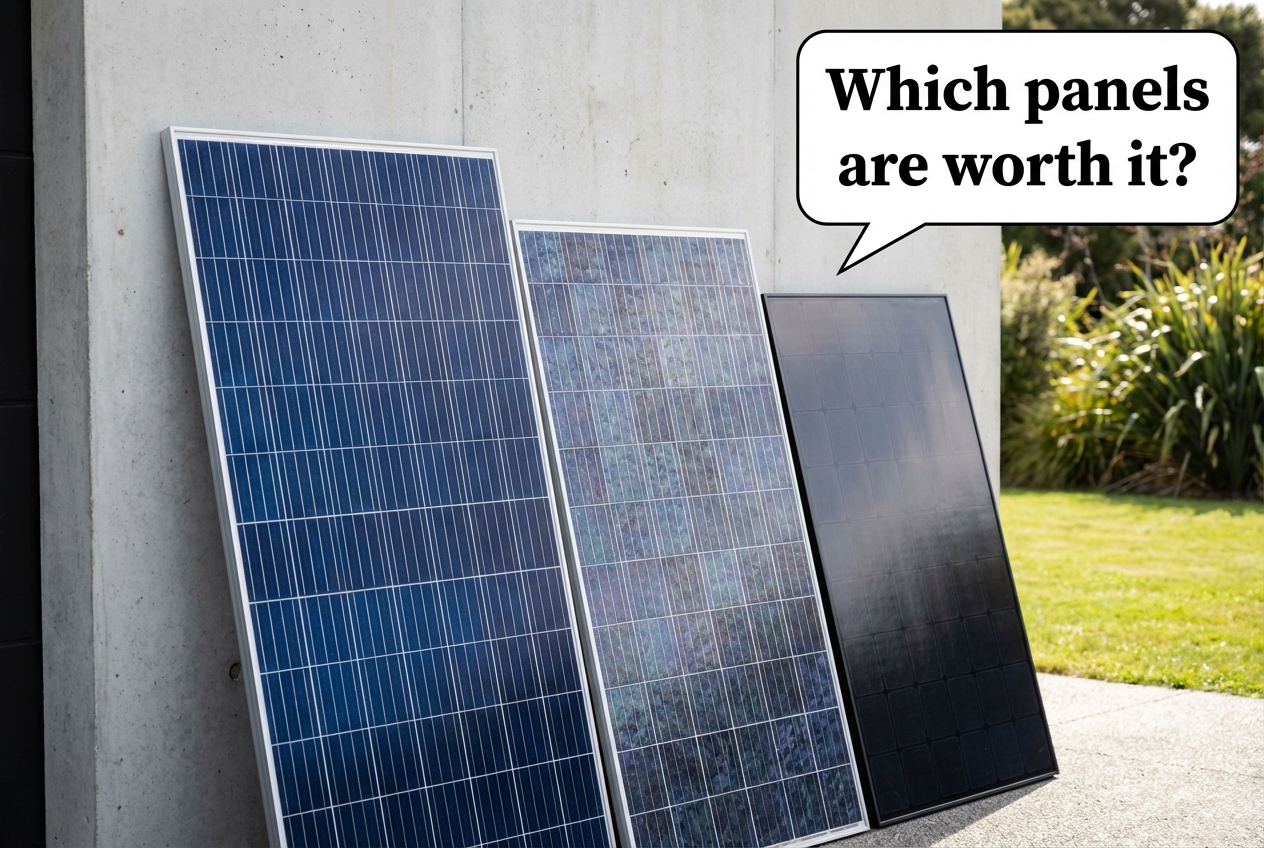
Best Solar Panels NZ: Brands, Tiers and What to Look For (2026)
Compare the best solar panels available in NZ. Tier 1 brands, specs, warranties, NZ pricing, and what installers actually use. TOPCon vs PERC vs HJT explained.
How Many Solar Panels Do I Need?
Work out how many solar panels your NZ home needs. Based on your power usage, roof space, and whether you're adding a battery or EV charger.
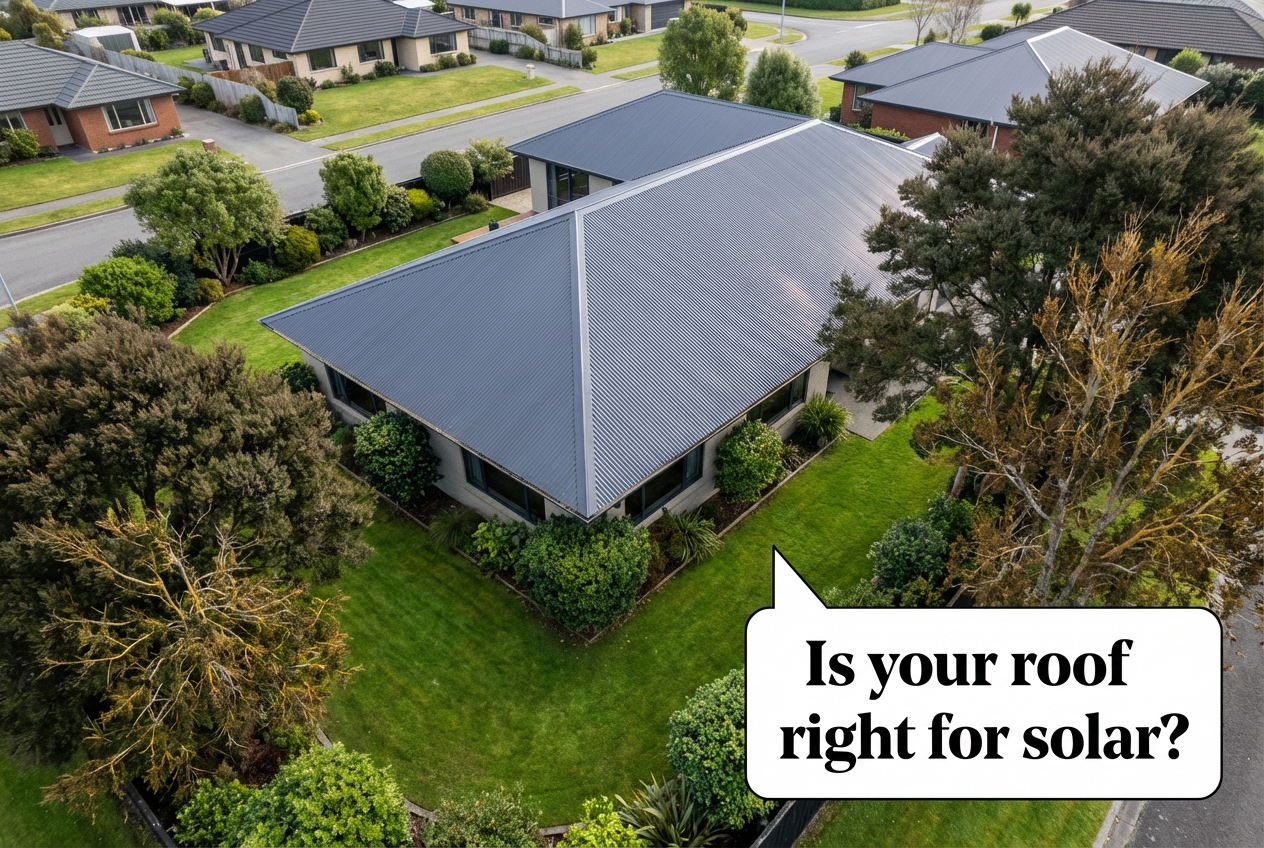
Is My House Suitable for Solar Panels?
Check if your NZ home is right for solar. Roof direction, pitch, shade, and structural factors explained for Kiwi houses.
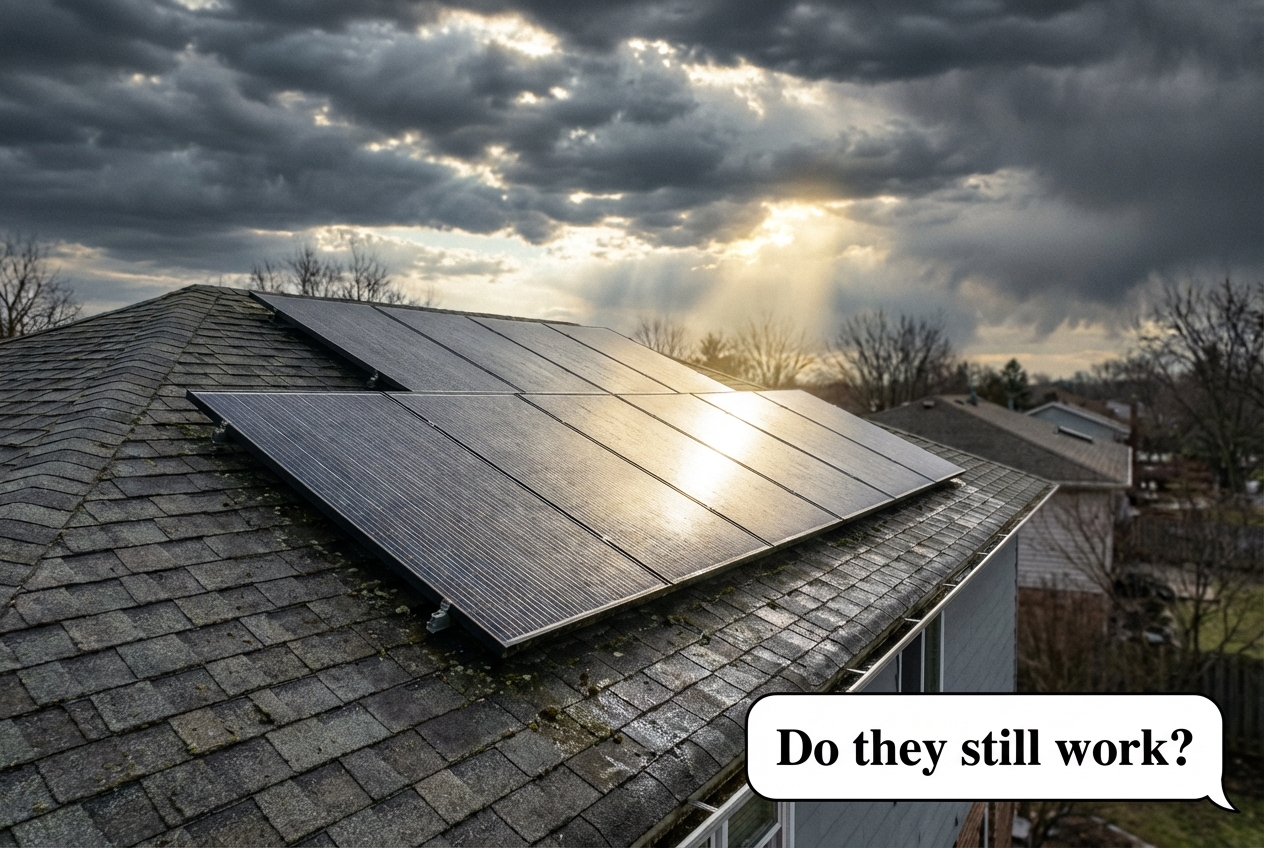
Do Solar Panels Work in Winter and on Cloudy Days in NZ?
Solar panels still generate power on cloudy days and through NZ winters. Here's exactly how much output changes and why it still works.