
Solar Buy-Back Rates NZ: Every Retailer Compared (2026)
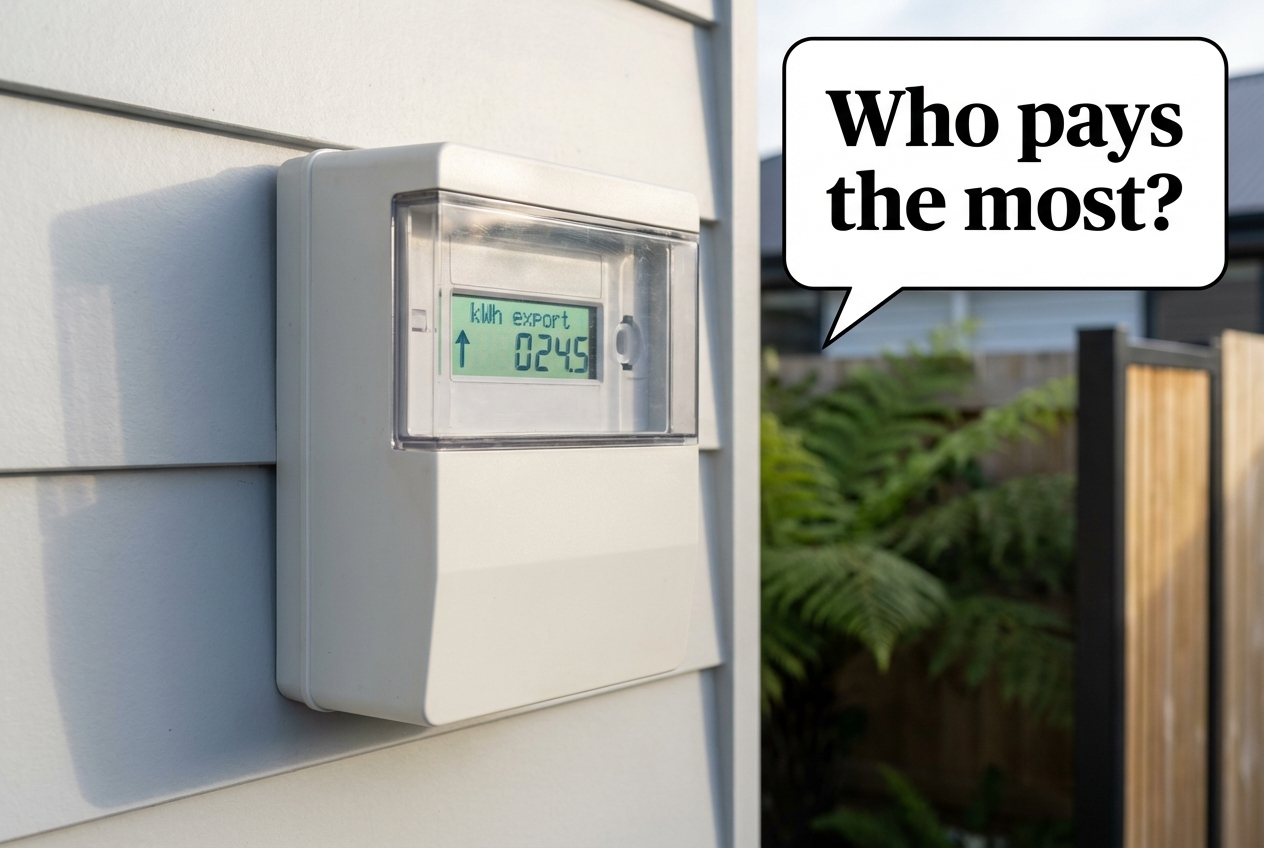
NZ buy-back rates range from 7c/kWh to 23c/kWh depending on your retailer and plan. That gap can mean hundreds of dollars a year in lost revenue. This guide breaks down every retailer, explains the upcoming July 2026 regulation, and shows you how to get the best deal for your solar system.
Already on solar? Check your current buy-back rate against the table below. If you’re getting less than 10c/kWh, switching could save you $200 or more per year.
Key Takeaways
What you need to know
- NZ buy-back rates range from 7c/kWh (Trustpower) to 23c/kWh (Octopus Energy peak). That gap can mean hundreds of dollars a year in lost revenue.
- New Zealand has no government-mandated feed-in tariff. Each retailer sets their own rates, and they can change them at any time.
- Self-consumption is worth 2 to 4 times more than exporting. Every kWh you use yourself saves you 30 to 38c. Every kWh you export earns you only 7 to 17c.
- Regulatory changes coming in July 2026 will require large retailers to offer fairer buy-back rates. Details are still being finalised.
- Don’t chase the highest buy-back rate in isolation. Your import rate, daily charges, and overall plan value matter more than export cents alone.
What Is a Solar Buy-Back Rate?
When your solar panels produce more electricity than your home is using at that moment, the surplus flows back into the grid. Your power company pays you for that exported energy. The rate they pay is your “buy-back rate” (also called a feed-in tariff or export rate).
In countries like Australia and the UK, governments mandate minimum feed-in tariffs. New Zealand doesn’t do this. Each electricity retailer sets their own buy-back rate, and they can adjust it whenever they like. That’s why rates vary so much across the market.
Here’s the thing that catches most people off guard: you pay 30 to 38 cents per kWh to buy power from the grid, but you only get 7 to 17 cents for every kWh you sell back. That’s a big gap, and it’s the main reason self-consumption matters more than your export rate (more on that below).
You buy electricity at 30 to 38c/kWh but sell it back at 7 to 17c. The real value of solar is using the power yourself.
Your buy-back rate is shown on your power bill as a credit. Most retailers calculate it per kWh, appearing as a negative line item that offsets your usage charges. Some retailers offer a flat rate across the day, while others (like Octopus) pay more during peak hours.
Every NZ Retailer Compared
We’ve compared buy-back rates from every major retailer in New Zealand. Rates shown are in cents per kWh (including GST unless noted). Data verified April 2026.
| Retailer | Standard | Best Rate |
|---|---|---|
| Octopus Energy | 17c/kWh | 23c (peak) |
| Meridian Energy | 12c/kWh | 17c + $300 credit |
| Mercury | 8-12c/kWh | 18c (ex GST) |
| Genesis Energy | 12c/kWh | N/A |
| Contact Energy | 8c/kWh | N/A |
| Trustpower | 7c/kWh | N/A |
| Frank Energy | Varies/kWh | N/A |
On mobile, a few columns are hidden for readability. Here are the key details for each retailer.
- Octopus Energy: Time-of-use option. Peaker plan pays 23c/kWh during peak export hours (7-9am, 5-9pm). Import rate: ~30c/kWh.
- Meridian Energy: Fixed rate locked for 3 years. $300 signup credit for new solar customers. Import rate: ~32c/kWh.
- Mercury: Promo rate through Harrisons Solar partnership, capped at 500kWh per billing cycle. Import rate: ~33c/kWh.
- Genesis Energy: Flat 12c across all residential plans. Simple, no surprises. Import rate: ~34c/kWh.
- Contact Energy: Standard buy-back on selected plans. Lower than most competitors. Import rate: ~30c/kWh.
- Trustpower: Market-based buyback rates. Among the lowest in the country. Import rate: ~32c/kWh.
- Frank Energy: No lock-in contract. Rates float with wholesale market. Import rate: ~28c/kWh.
Which retailer should you pick?
If you’re home during the day and can shift usage to match solar generation, Octopus Energy’s Peaker plan is hard to beat. You’ll earn 23c/kWh during peak hours when the grid needs your power most.
If you prefer simplicity and rate certainty, Meridian’s 3-year fixed plan at 17c/kWh (plus the $300 signup credit) offers stability. You won’t get the highest possible rate, but you know exactly what you’ll earn for three years.
Genesis at 12c/kWh is a solid middle-ground option with no conditions or caps. Mercury’s Harrisons promo rate of 18c/kWh looks attractive, but it’s capped at 500kWh per billing cycle and requires going through a specific installer.
Why the Highest Rate Isn't Always Best
This is the single biggest mistake we see solar homeowners make. They switch to whichever retailer offers the highest buy-back rate without looking at the full picture. Here’s why that can backfire.
The import rate matters more
A typical NZ household with solar still imports 40 to 60% of their electricity from the grid (evenings, cloudy days, winter). If you switch to a retailer paying 23c/kWh for exports but charging 38c for imports, you could end up paying more overall than staying with a retailer offering 12c exports and 28c imports.
Let’s run the numbers for a typical 6.6kW system:
- Annual generation: about 9,000kWh
- Self-consumption (60%): 5,400kWh
- Exports: 3,600kWh
- Grid imports: 3,500kWh
With a 23c export / 38c import retailer, your export credit is $828, but your import bill is $1,330. Net cost: $502.
With a 12c export / 28c import retailer, your export credit is $432, but your import bill is $980. Net cost: $548.
The difference is only $46 in this example. But change the self-consumption ratio (say you’re out all day and only self-consume 40%), and the cheaper import rate wins easily. Always compare the full plan, not just the export number.
Daily fixed charges add up
Every NZ power plan includes a daily fixed charge (typically $1.30 to $2.20/day). Some retailers with high buy-back rates make up the margin with higher daily charges. Over a year, that’s $475 to $800 before you use a single kWh. Always factor this in.
Contract terms and conditions
Mercury’s 18c rate is capped at 500kWh per billing cycle. If your system exports more than that (most 6kW+ systems will in summer), anything above the cap drops to their standard rate of 8 to 12c. Meridian’s 17c rate requires a 3-year commitment. If your circumstances change, you might be locked in.
Always compare the full plan: import rate, export rate, daily charges, and any caps or conditions. The best buy-back rate on paper isn’t always the best deal in practice.
Self-Consumption vs Export: Where the Real Money Is
Here’s the maths that changes how most people think about solar. Every kWh you generate and use in your own home saves you the full retail rate (30 to 38 cents). Every kWh you export only earns you the buy-back rate (7 to 17 cents). That means self-consumed solar is worth two to four times more than exported solar.
For a typical system generating 9,000kWh per year:
- At 60% self-consumption (5,400kWh), you save $1,728 at 32c/kWh avoided import
- The remaining 3,600kWh exported at 12c earns you $432
- Total benefit: $2,160/year. But 80% of the value comes from self-consumption, not exports
If you could push self-consumption from 60% to 80% (using a battery, timer-controlled hot water, or shifting appliance usage), your savings jump significantly even though you’re exporting less.
Smart habits that boost self-consumption
You don’t need a battery to increase self-consumption. These changes are free:
- Run your dishwasher, washing machine, and dryer during the middle of the day when panels are producing
- Set your hot water cylinder to heat during solar hours (your electrician can install a timer, or your installer may configure this)
- Charge devices and run the vacuum during daylight hours
- If you have an EV, charge it during the day whenever possible
- Use delay-start timers on appliances so they run while you’re at work
Self-consumed solar is worth 2 to 4 times more than exported solar. Simple habit changes can boost your self-consumption from 60% to 80% without a battery.
Batteries: the self-consumption multiplier
A home battery stores your daytime solar surplus and releases it in the evening when you’d otherwise buy from the grid. This can push self-consumption from 60% to 80 or even 90%. At current battery prices ($9,000 to $24,000 installed), the payback on a battery alone is still long (8 to 15 years). But when you factor in time-of-use savings and backup power value, it’s getting closer to worthwhile for many households.
Read our full guide: Solar Battery Storage NZ: Costs, Brands, and Is It Worth It?
The July 2026 Regulatory Change
The Electricity Authority has been reviewing distributed generation pricing for several years. In late 2025, they confirmed that new regulations will come into effect in July 2026 requiring large retailers (those with more than 100,000 customers) to offer “fair and reasonable” buy-back rates.
What does “fair and reasonable” mean in practice? The details are still being finalised, but the direction is clear:
- Retailers will need to demonstrate their export rates reflect the actual value of distributed solar to the grid
- The Electricity Authority will publish guidelines on how to calculate this value
- Smaller retailers (under 100,000 customers) won’t be covered initially, though this may expand later
- The regulations are expected to set a floor rather than mandate a specific rate
This is good news for solar homeowners. Retailers paying 7 to 8c/kWh will likely need to increase their rates. But don’t expect the gap between retail and export rates to disappear entirely. The grid has real costs (transmission, distribution, maintenance) that need to be covered.
New regulations from July 2026 will push the lowest buy-back rates up. But self-consumption will still be worth more than exporting.
Our advice: don’t wait for the regulations to go solar. The financial case already works with current rates. Any improvement in buy-back rates from July 2026 is a bonus on top of your existing savings.
How to Switch Retailers for Better Rates
Switching power companies in NZ is free and usually takes 1 to 3 business days. There’s no penalty for switching (unless you’re on a fixed-term contract). Here’s how to do it properly.
[1] Step 1: Check your current plan
Log into your current retailer’s app or website. Note down your import rate (cents per kWh), export/buy-back rate, and daily fixed charge. If you can’t find these, call them and ask.
[2] Step 2: Compare on Powerswitch
Go to Powerswitch.org.nz (a free government-backed comparison tool run by Consumer NZ). Enter your address and usage details. It will show you estimated annual costs across all available retailers in your area.
Important: Powerswitch doesn’t always show buy-back rates prominently. You may need to click into plan details or contact the retailer directly to confirm the export rate.
[3] Step 3: Compare both import AND export
Don’t just look at the buy-back rate. Calculate your total annual cost including imports, exports, and daily charges. The cheapest overall plan may not have the highest buy-back rate.
Switching power companies is free and takes 1 to 3 business days. Always compare the total plan cost, not just the export rate.
[4] Step 4: Check meter compatibility
Some retailers and plans require a smart meter. Most NZ homes already have one, but if yours hasn’t been upgraded, your new retailer will arrange it (usually free). A few time-of-use plans need a meter that records half-hourly data. Check with the new retailer before signing up.
[5] Step 5: Sign up online
Most switches happen entirely online. Your new retailer handles the transfer with your old one. You won’t lose power during the switch. Your old retailer will send a final bill, and the new one starts billing from the switch date.
Time-of-Use Plans: Are They Worth It?
Time-of-use (TOU) pricing charges you different rates depending on when you use (or export) electricity. Typically, you pay more during peak hours (7 to 9am, 5 to 9pm) and less off-peak. Some TOU plans also pay more for solar exports during peak periods.
Octopus Energy’s Peaker plan is the standout example in NZ. Their standard buy-back is 17c/kWh, but during peak hours you earn 23c/kWh for exports. If your system is still producing at 5pm in summer, that extra 6c/kWh adds up.
TOU works best if you can shift usage
The catch with TOU pricing is that your import rate is also higher during peak hours. If you’re cooking dinner, running the heat pump, and charging your EV between 5 and 9pm, those expensive peak import rates can eat into any export gains.
TOU plans are best suited to households that:
- Have a battery that can discharge during peak hours (avoiding expensive peak imports)
- Are disciplined about running appliances off-peak (delayed-start dishwashers, overnight EV charging)
- Have a north-facing roof that still produces well into the late afternoon
When flat-rate plans win
If your household’s usage pattern is hard to shift (young kids, working from home, high evening usage), a flat-rate plan with a decent buy-back rate is simpler and often just as cost-effective. Genesis at 12c/kWh with no conditions is a good example.
How Buy-Back Rates Affect Your Payback Period
Your solar payback period is how long it takes for your system to “pay for itself” through electricity savings and export credits. Buy-back rates play a role, but they’re not the biggest factor.
Let’s compare payback periods for a 6.6kW system ($13,000 installed) with 60% self-consumption:
| Buy-back rate | Self-consumption | Export revenue | Payback |
|---|---|---|---|
| 7c/kWh | $1,728/yr | $252/yr | ~6.6 years |
| 12c/kWh | $1,728/yr | $432/yr | ~6.0 years |
| 17c/kWh | $1,728/yr | $612/yr | ~5.6 years |
The difference between the worst and best buy-back rate? About one year on your payback period. That’s meaningful, but it’s the self-consumption savings ($1,728) doing the heavy lifting in every scenario. Increasing your self-consumption from 60% to 80% has a bigger impact on payback than doubling your buy-back rate.
Switching from 7c to 17c buy-back saves about one year on your payback. Lifting self-consumption from 60% to 80% saves you more.
Tips to Maximise Your Export Revenue
While self-consumption should be your first priority, there are ways to get more from the power you do export.
Choose the right retailer for your usage pattern
If you export most during the middle of the day (typical for households where everyone’s at work), a flat-rate plan with a strong buy-back rate makes sense. If you have a battery and can time your exports for peak hours, a TOU plan like Octopus Peaker will earn you more.
Size your system appropriately
Oversizing your system sounds appealing, but if most of the extra generation goes to export at 12c/kWh, the return on those extra panels is much lower. A well-sized system that matches your usage pattern (with a modest buffer for future needs like an EV) is usually the sweet spot.
Monitor your generation and export patterns
Most modern inverters come with monitoring apps (Enphase, Fronius, SolarEdge, Huawei). Check your daily export patterns. If you’re exporting heavily between 10am and 2pm, that’s power you could be using yourself with simple habit changes.
Review your plan annually
Buy-back rates change. New plans launch. What was the best deal last year might not be this year. Set a calendar reminder to review your plan every 12 months. Use Powerswitch to check if a better option is available.
Consider a battery for export arbitrage
On a TOU plan, you can store cheap daytime solar in a battery and export it during peak hours for a higher rate. This is sometimes called “export arbitrage.” It’s not the primary reason to get a battery, but it’s a nice bonus if you’re already considering one.
What to Do Next
If you’re already on solar, check your current buy-back rate and compare it to the table above. If you’re getting less than 10c/kWh, it’s worth switching.
If you’re still considering solar, the buy-back rate is one piece of the puzzle. The bigger questions are: how much will you self-consume, what will the system cost, and what’s your total payback period? Our free solar survey takes about 3 minutes and gives you personalised estimates for all of these.
Frequently Asked Questions
What is the highest solar buy-back rate in NZ right now?
Octopus Energy’s Peaker plan offers up to 23c/kWh during peak export hours (7 to 9am, 5 to 9pm). Their standard Flexi plan pays 17c/kWh flat. Meridian’s 3-year fixed solar plan pays 17c/kWh plus a $300 signup credit.
Do I have to pay tax on solar buy-back income?
For residential solar systems used primarily for your own home, the IRD does not treat buy-back credits as taxable income. If you’re generating at a commercial scale or running a business, different rules may apply. Check with your accountant if you’re unsure.
Can my retailer change my buy-back rate?
Yes. Unless you’re on a fixed-term plan (like Meridian’s 3-year solar plan), your retailer can adjust your buy-back rate with notice. Most give 30 days’ notice, and you can switch to another retailer if the new rate doesn’t work for you.
What happens to my exported power at night?
Solar panels don’t generate at night, so there’s nothing to export. Any electricity you use at night comes from the grid at your standard import rate. This is where batteries come in: they store daytime solar for evening use, reducing how much you buy from the grid after dark.
Is there a minimum system size to get a buy-back rate?
No minimum size is required. Even a small 2kW system will export surplus power and earn buy-back credits. However, very small systems may not export enough to make the rate a significant factor in your savings. For most NZ homes, a 5kW or larger system is the practical starting point.
Will the July 2026 regulations guarantee a minimum buy-back rate?
The Electricity Authority hasn’t confirmed a specific minimum rate. The regulations will require large retailers to offer rates that are “fair and reasonable” based on the value distributed solar provides to the grid. The expectation is that the lowest rates (7 to 8c) will need to increase, but exact figures won’t be known until the rules are finalised.
Should I wait for better buy-back rates before going solar?
We wouldn’t recommend waiting. The financial case for solar already works at current rates because most of your savings come from self-consumption, not exports. Any improvement in buy-back rates from the July 2026 regulations is a bonus. Every month you wait is a month of savings you miss out on.
How do I find my current buy-back rate?
Check your latest power bill. Look for a line item showing export credits (sometimes called “solar buy-back” or “generation credit”). It will show both the kWh exported and the rate per kWh. If you can’t find it, log into your retailer’s app or call their customer service line.
Written by Sarah Chen
Sarah has spent three years covering renewable energy in New Zealand, from residential rooftop systems to community solar projects. She holds a degree in Environmental Science from the University of Auckland.
Reviewed by
Matt Wilson
Registered Electrician & Solar Installer
Related guides
View all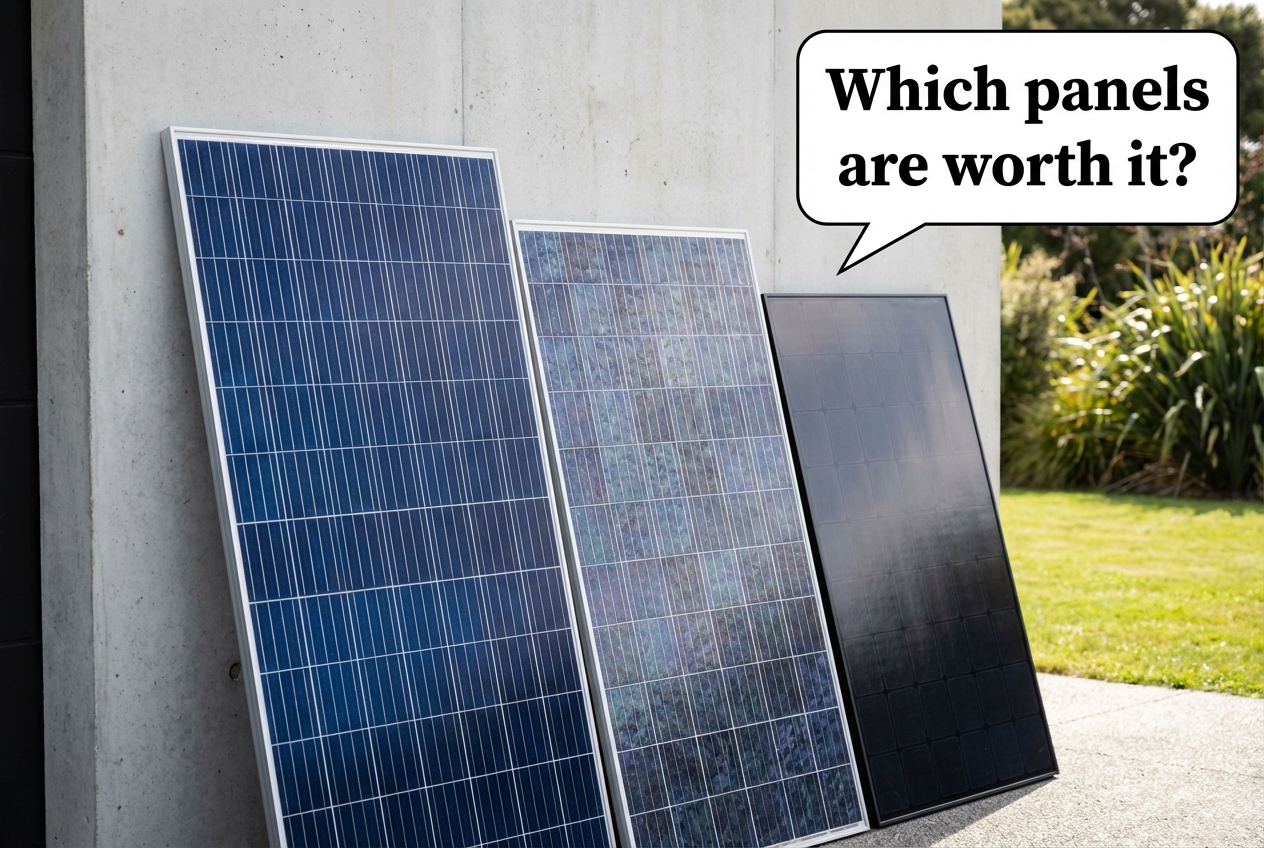
Best Solar Panels NZ: Brands, Tiers and What to Look For (2026)
Compare the best solar panels available in NZ. Tier 1 brands, specs, warranties, NZ pricing, and what installers actually use. TOPCon vs PERC vs HJT explained.
How Many Solar Panels Do I Need?
Work out how many solar panels your NZ home needs. Based on your power usage, roof space, and whether you're adding a battery or EV charger.

Is My House Suitable for Solar Panels?
Check if your NZ home is right for solar. Roof direction, pitch, shade, and structural factors explained for Kiwi houses.
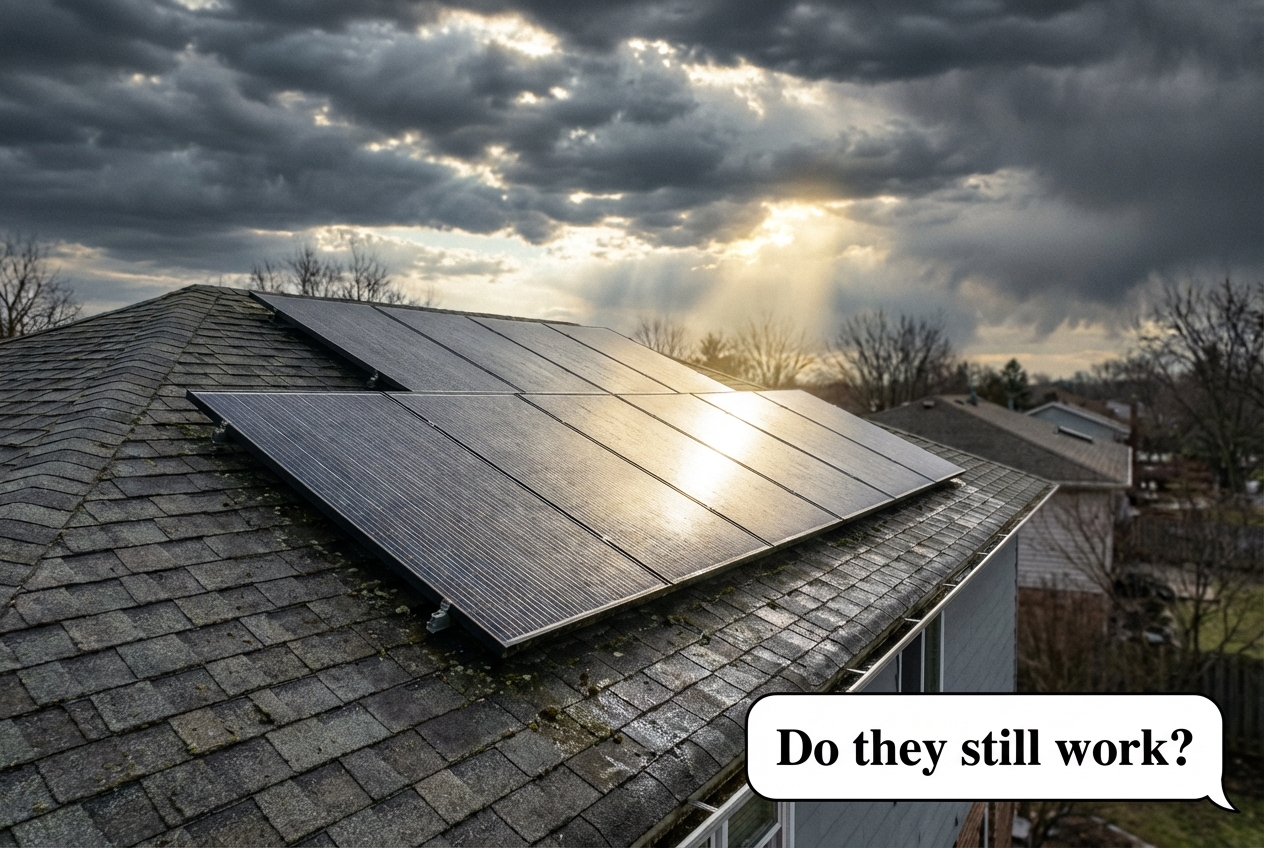
Do Solar Panels Work in Winter and on Cloudy Days in NZ?
Solar panels still generate power on cloudy days and through NZ winters. Here's exactly how much output changes and why it still works.