
Is My House Suitable for Solar Panels?
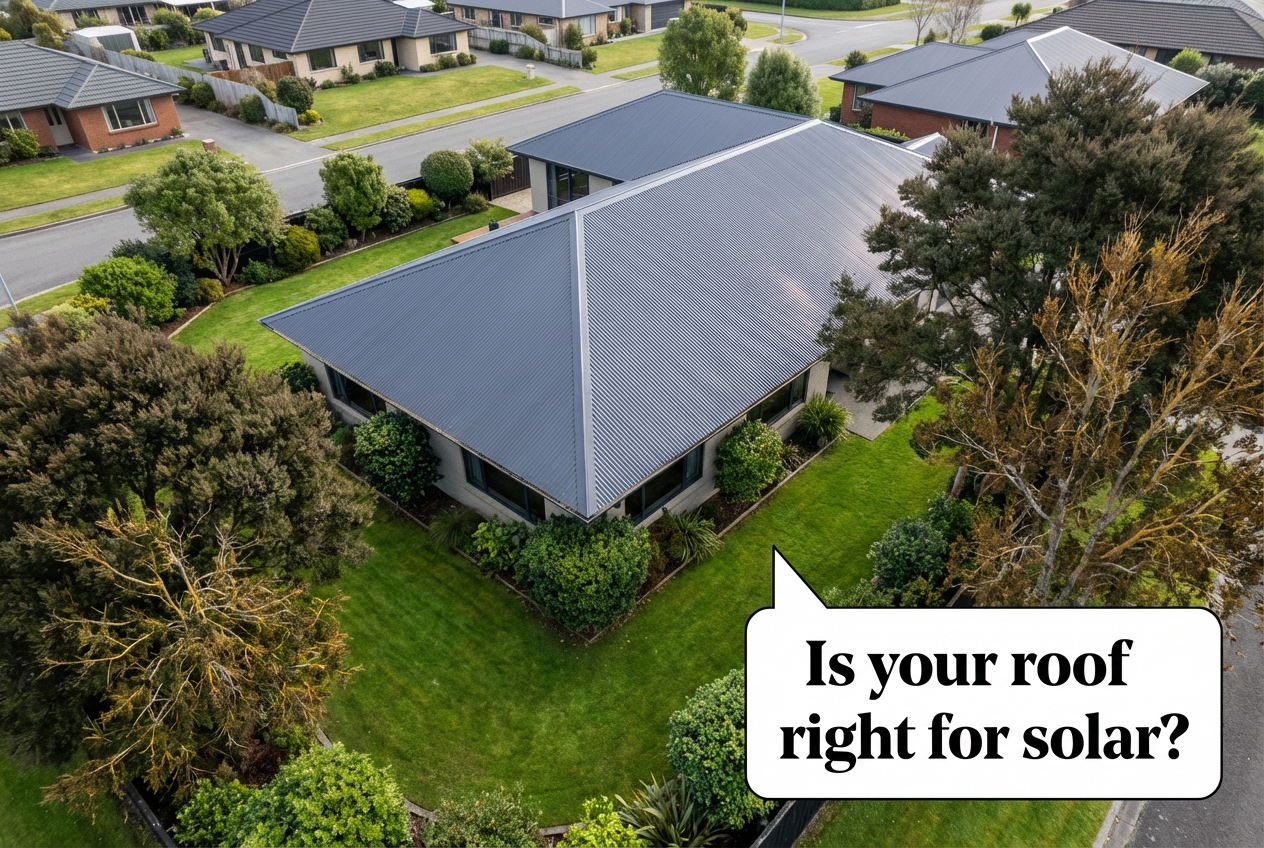
Most New Zealand homes are suitable for solar panels. You don’t need a perfect setup. If your roof gets reasonable sun, faces roughly north (or east/west), and is in decent condition, you’re likely a good candidate.
Use our free solar quiz to get a personalised assessment for your home in under two minutes.
Key Takeaways
- North-facing is best, but east and west roofs produce 75-80% of max output
- Most NZ roofs are 15-25 degrees, which still captures 90-95% of optimal output
- A typical 6.6kW system needs about 30m2 of roof space (most 3-bed homes have 70m2+)
- Building consent not required for most installs since October 2025
- Corrugated steel and long-run metal roofs (70-80% of NZ homes) are the easiest to install on
What Makes a House Suitable for Solar?
The good news? Most New Zealand homes are perfectly fine for solar. You don’t need a perfect north-facing roof on a brand new house in full sunshine. Real-world conditions are rarely textbook, and modern solar technology is designed for exactly that.
There are five main factors that determine how well solar will work on your home. We’ll walk through each one in detail, but here’s the quick summary:
- Roof direction (orientation). North is ideal. East and west still work well.
- Roof angle (pitch). 30-45 degrees is optimal, but flatter roofs are fine too.
- Shading. Less shade means more power. Partial shade is manageable with the right gear.
- Available space. You need about 30m2 for a standard system. Most homes have plenty.
- Roof condition. Your roof should be structurally sound and not due for replacement.
If your home ticks three or four of those boxes, you’re in great shape. Even if one factor isn’t perfect, there are usually workarounds. Let’s dig into each one.
What Direction Does Your Roof Face?
Roof orientation is the single biggest factor in solar performance. In New Zealand, we’re in the southern hemisphere, so the sun tracks across the northern sky. That means north-facing roofs get the most direct sunlight throughout the day, and south-facing roofs get the least.
But here’s what most people don’t realise: you don’t need a north-facing roof for solar to make sense. East and west-facing roofs still produce 75-80% of maximum output, and that’s more than enough for strong savings.
An east/west split system can actually match a north-facing roof for self-consumption, because it captures morning and afternoon sun when you’re most likely using power.
| Direction | Output | Notes |
|---|---|---|
| True North | 100% | Ideal. Maximum sun exposure year-round. |
| NNE / NNW | 95-98% | Excellent. Nearly identical to true north. |
| NE / NW | 85-92% | Very good. Slight morning or afternoon bias. |
| East | 75-80% | Good. Strong morning production. |
| West | 75-80% | Good. Strong afternoon production. |
| SE / SW | 60-70% | Fair. Reduced output, longer payback. |
| South | 40-55% | Not recommended. Very low output. |
How to check your roof direction: Open Google Maps, find your house, and switch to satellite view. North is always up on the map. Or just look at where the sun is around midday. It’ll be roughly to your north.
If your home has multiple roof faces, an installer can split the array across two orientations. An east/west split is common and works well. The only direction that really struggles is due south, and even then, it’s not impossible if you have other north or east-facing roof sections available.
Is Your Roof at the Optimal Angle?
The ideal roof pitch for solar in NZ is roughly equal to your latitude. In practice, that means:
- Auckland: 30-35 degrees optimal
- Wellington: 35-40 degrees optimal
- Christchurch: 40-45 degrees optimal
Here’s the thing, though. Most New Zealand roofs sit between 15 and 25 degrees. That’s flatter than the theoretical optimum, but it still captures 90-95% of maximum output. The difference between a 20-degree roof and a 35-degree roof is surprisingly small in real-world generation.
A steeper roof (say, 40-45 degrees) actually has an advantage in winter because it catches more of the low-angle winter sun. But it produces slightly less in summer when the sun is higher. Over a full year, the differences tend to even out.
If your roof pitch is between 15 and 45 degrees, you’re fine. Don’t overthink it.
How to estimate your roof pitch: If you can access your roof space, measure the rise over a 1-metre horizontal run. A 30cm rise = roughly 17 degrees. A 60cm rise = roughly 31 degrees. Or, your building plans (if you have them) will show the exact pitch. Most installers will assess this during their site visit or from satellite imagery.
Does Your Roof Get Much Shade?
Shade is the enemy of solar production. Even partial shade on one or two panels used to cause problems for the entire system, because traditional string inverters link panels in series. If one panel underperforms, it drags down the whole string.
Modern technology has largely solved this. There are two main approaches:
- Microinverters (like Enphase) convert power at each individual panel. A shaded panel only affects itself, not its neighbours. This is the best option for partially shaded roofs.
- Power optimisers (like SolarEdge) do the same thing but at a lower cost. Each panel has its own optimiser that maximises its output independently.
What counts as problematic shade? Trees, chimneys, neighbouring buildings, and vent pipes are the usual culprits. If shade covers a small area for part of the day, it’s manageable. If most of your north-facing roof is in shadow for the bulk of daylight hours, that’s a bigger issue.
A good installer will analyse shading patterns before recommending a system layout. They’ll use satellite imagery and sometimes a shading tool like a SunEye or Solar Pathfinder to map exactly where and when shade falls on your roof. If a tree is the problem, sometimes trimming a few branches is all it takes.
Partial shade on a few panels is fine with microinverters. Heavy shade on most of the roof is a dealbreaker.
Has Your Roof Got Enough Room?
Each solar panel is roughly 1.7m by 1.1m, which works out to about 2m2 per panel. Here’s what different system sizes need:
- 4kW system (10 panels): roughly 20m2
- 6.6kW system (15 panels): roughly 30m2
- 10kW system (23 panels): roughly 46m2
The average three-bedroom NZ home has around 70m2 or more of total roof area, and you only need to use one section of it. Panels don’t need to go on every roof face. You pick the best orientation (usually north, or a combination of east and west) and use that section.
Keep in mind that some roof area is unusable. You need setbacks from edges (typically 200mm or more), and you’ll lose space around vents, skylights, chimneys, and valleys. A good installer accounts for all of this when designing your layout.
Tight on space? Higher-efficiency panels like the REC Alpha Pure 2 series produce more watts per square metre. They cost a bit more per panel, but you need fewer of them to reach the same system size.
Can Your Roof Hold Solar Panels?
Modern solar panels weigh 18-22kg each. Once you factor in the mounting rails and clamps, a typical 6.6kW system adds about 350-450kg spread across 30m2 of roof. That’s roughly 12-14kg per square metre, which is lighter than concrete roof tiles.
The vast majority of NZ roofs handle this weight without any issues. Your roof was engineered to support itself, plus wind loads, plus a person walking on it for maintenance. Solar panels are a modest addition.
When to get a structural check:
- Your roof is older than 40-50 years and shows signs of wear
- You can see sagging or dipping in the roofline
- There’s visible deterioration (rust, rotting timber, cracked tiles)
- Your home has been modified and you’re unsure about the roof framing
If your roof needs replacing in the next few years, it’s worth doing that before the solar installation. Removing and reinstalling panels for a re-roof typically costs $1,500 to $3,000, which you’d rather avoid.
Solar panels add about 12-14kg per square metre to your roof. That’s lighter than concrete tiles and well within structural limits for the vast majority of NZ homes.
NZ Roof Types and Solar Compatibility
| Roof Type | NZ Share | Install | Notes |
|---|---|---|---|
| Corrugated steel/iron | 50-60% | Easy | Most common in NZ. Clamps attach directly to ribs with no penetrations. Fastest install. |
| Long-run metal | 15-20% | Easy | Standing seam and tray profile. Clamp systems work well. |
| Concrete tile | 15-20% | Moderate | Heavier roof, needs tile hooks. Slightly more labour. |
| Clay tile | ~5% | Moderate | Fragile tiles need careful handling. Tile hook mounting. |
| Flat membrane | 5-10% | Moderate | Requires tilt frames (ballasted or fixed) to angle panels north. |
What if My Roof is Flat?
Flat roofs are perfectly fine for solar. They actually give you more flexibility because you can angle the panels in any direction you want using tilt frames.
There are two main types of flat-roof mounting:
- Ballasted systems use weighted frames that sit on the roof membrane without any penetrations. The weight of the frames (and sometimes additional ballast blocks) holds everything in place. This is the most common approach for flat roofs.
- Fixed tilt frames are bolted through the membrane with waterproof flashings. More secure in high-wind areas, but requires careful waterproofing.
Tilt frames are usually set to 20-30 degrees and aimed north. This gets your panels close to the optimal angle even on a completely flat surface. The trade-off is that you need more roof space because tilted panels cast shadows behind them, and you need gaps between rows to avoid one row shading the next.
Expect to need about 40-50% more roof area on a flat roof compared to a pitched roof for the same system size. That said, flat-roofed homes often have generous roof areas, so this isn’t usually a problem.
What Property Types are Most Suitable?
Solar works on all kinds of homes, but some are easier than others:
| Property Type | Suitability | Notes |
|---|---|---|
| Standalone house | Ideal | Full roof access, no shared walls, most flexibility for panel placement and system size. |
| Townhouse | Good | Works well. May have less roof space, so you might need a slightly smaller system. |
| Unit / apartment | Possible | Needs body corporate approval. Shared roof space and strata rules can complicate things. |
| Heritage / character home | Case by case | May need resource consent if in a heritage overlay zone. Panels on rear-facing roofs are usually fine. |
Building consent: Since October 2025, most residential solar installations in NZ are exempt from building consent. This applies if your system is under 40m2 (that’s about 20kW, far larger than most residential systems) and your house is in a standard wind zone. Heritage-listed homes or high-wind-zone properties may still need consent, but your installer will handle the application if it’s required.
Can You Still Get Solar If...
These are the most common “but what about...” questions we hear. Short answer to most of them: yes, you can.
[1] Your Roof Isn't North-Facing
Absolutely. East and west-facing roofs produce 75-80% of what a north-facing roof would. For a typical household, that still means solid savings and a reasonable payback period. NE and NW roofs are even better at 85-92%.
The only orientation we’d genuinely advise against is due south, which produces just 40-55% of maximum output. Even then, if you have a south-facing home with an east or west roof section, you can install panels there instead.
Many installers actually recommend splitting panels across east and west faces. You get morning production on the east side and afternoon production on the west. For households that use power throughout the day (rather than just at midday), this pattern can match or outperform a north-only setup for self-consumption.
[2] You Have Some Shading
Partial shade is not a dealbreaker. If a tree shades one corner of your roof for a few hours in the morning, or a chimney casts a shadow over one panel in winter, modern equipment handles it well.
Microinverters (from brands like Enphase) are the go-to solution. Each panel has its own small inverter, so a shaded panel only reduces its own output without affecting the rest. Power optimisers (from SolarEdge and similar) achieve the same result at a slightly lower cost.
What doesn’t work well is heavy, all-day shading across most of the roof. If tall buildings or dense trees block direct sunlight for the majority of the day, solar output will be too low for a worthwhile return. But that scenario is less common than people think.
Don’t rule yourself out before getting a proper assessment. Most homeowners who think their roof isn’t suitable are pleasantly surprised.
[3] Your Roof is Old or Worn
If your roof needs replacing within the next 5-10 years, do the re-roof first. Solar panels last 25+ years, and you don’t want to pay $1,500 to $3,000 to remove and reinstall them partway through their life.
If your roof is older but still in solid condition (no leaks, minimal rust, framing intact), it’s probably fine. Your installer will assess the roof condition during the site visit. If they spot any concerns, they’ll let you know before quoting.
Pro tip: If you’re re-roofing anyway, that’s actually the perfect time to install solar. The installers can coordinate with your roofer, and running cables and mounting rails is easier when the old roof is off.
[4] You're Renting
Technically possible, but rarely practical. The landlord owns the property and makes the decision. Even if they agree, the financial payback doesn’t favour tenants because you can’t take the panels with you when you leave.
Some landlords are willing to install solar because it increases the property’s value and makes it more attractive to tenants. If you’re keen, it’s worth having the conversation. Just be realistic that the decision (and the investment) sits with the property owner.
If you’re a landlord reading this, solar can add $15,000 to $25,000 to your property value and attract quality tenants who value lower running costs.
How to Check Your Home's Solar Potential
You can do a solid initial assessment yourself before talking to any installer. Here’s how:
Step 1: Check Your Roof Direction
Open Google Maps, search for your address, and switch to satellite view. North is up. Look at which way your main roof faces. If it points roughly toward the top of the screen, that’s north-facing. If it points left, that’s west. Right is east.
Step 2: Estimate Your Roof Pitch
If your roof looks fairly standard from the street (not super steep, not dead flat), it’s probably in the 15-25 degree range. That’s the sweet spot for most NZ homes and captures 90-95% of optimal solar output. Don’t stress about getting this exact.
Step 3: Check for Shade
Look at your roof around midday on a sunny day. Are there shadows from trees, buildings, or structures falling on the north-facing section? If the main panel area gets clear sun from about 9am to 3pm, you’re in good shape.
Step 4: Estimate Available Space
Use Google Maps to roughly measure your north-facing (or best-facing) roof section. You need about 30m2 for a standard 6.6kW system. If your roof section looks like it’s at least 6m by 5m, you’ve got enough.
Step 5: Get a Proper Assessment
Your own checks give you a good idea, but a proper assessment from a qualified installer will confirm everything. They use detailed satellite imagery, shading analysis tools, and structural knowledge to design the best layout for your specific roof.
What to Do Next
If you’ve read this far, you probably have a pretty good idea of whether your home is suitable. For most readers, the answer is yes.
Here’s the simplest next step: get a personalised solar assessment. It takes two minutes, costs nothing, and gives you an estimate tailored to your actual roof, location, and power usage.
The best time to install solar in NZ is spring or early summer (September to December), so your system is up and running for the peak production months. But installers work year-round, and getting quotes early means you can compare properly without rushing.
Frequently Asked Questions
What roof direction is best for solar in New Zealand?
North-facing is ideal in NZ because we're in the southern hemisphere. A true north roof gets 100% of available solar output. NNE and NNW are almost as good (95-98%). East and west-facing roofs still produce 75-80% of maximum output, which is enough for most households to see solid savings.
Do I need building consent for solar panels in NZ?
Since October 2025, most residential solar installations no longer need building consent. If your system is under 40m2 (which covers systems up to about 20kW) and your house is in a standard wind zone, you're exempt. Very large systems, heritage buildings, or high wind zones may still need consent. Your installer handles the paperwork either way.
Can I get solar if my roof faces east or west?
Yes. East and west-facing roofs produce 75-80% of what a north-facing roof would. That's still a very worthwhile amount. Many installers actually recommend an east/west split because it captures morning and afternoon sun, which can match or beat north-facing for self-consumption if you're home during those hours.
How much roof space do I need for solar panels?
Each standard panel takes up about 2m2. A typical 6.6kW system (15 panels) needs roughly 30m2 of usable roof space. Most NZ three-bedroom homes have 70m2 or more of total roof area, so space is rarely an issue. You don't need to fill the entire roof.
Can I install solar panels on a tile roof?
Yes. Both concrete and clay tile roofs are fine for solar. Installers use tile hooks that slide under the tiles, so there's no drilling through the tiles themselves. It takes a bit more labour than a metal roof install, but it's a standard, well-proven method used across NZ.
Will solar panels damage my roof?
When installed by a qualified installer, no. Metal roof systems use clamps that grip the roof ribs without penetrating the surface. Tile roofs use hooks that sit under the tiles. All systems include rubber gaskets and flashing for waterproofing. Reputable installers offer a workmanship warranty that covers any roof-related issues.
How heavy are solar panels? Will my roof support them?
Modern solar panels weigh 18-22kg each, which works out to about 12-14kg per square metre once mounted. That's lighter than concrete tiles. The vast majority of NZ roofs handle this weight without any issues. If your roof is very old, sagging, or has visible deterioration, get a structural check before installing.
Can I get solar if I have trees shading my roof?
Partial shade is manageable. If only a corner of your roof gets shade at certain times of day, microinverters or power optimisers ensure the shaded panels don't drag down the rest of the system. Heavy shade across most of the roof is a different story, and you'd want to consider trimming or removing problem trees first.
Written by Sarah Chen
Sarah has spent three years covering renewable energy in New Zealand, from residential rooftop systems to community solar projects. She holds a degree in Environmental Science from the University of Auckland.
Reviewed by
Matt Wilson
Registered Electrician & Solar Installer
Related guides
View all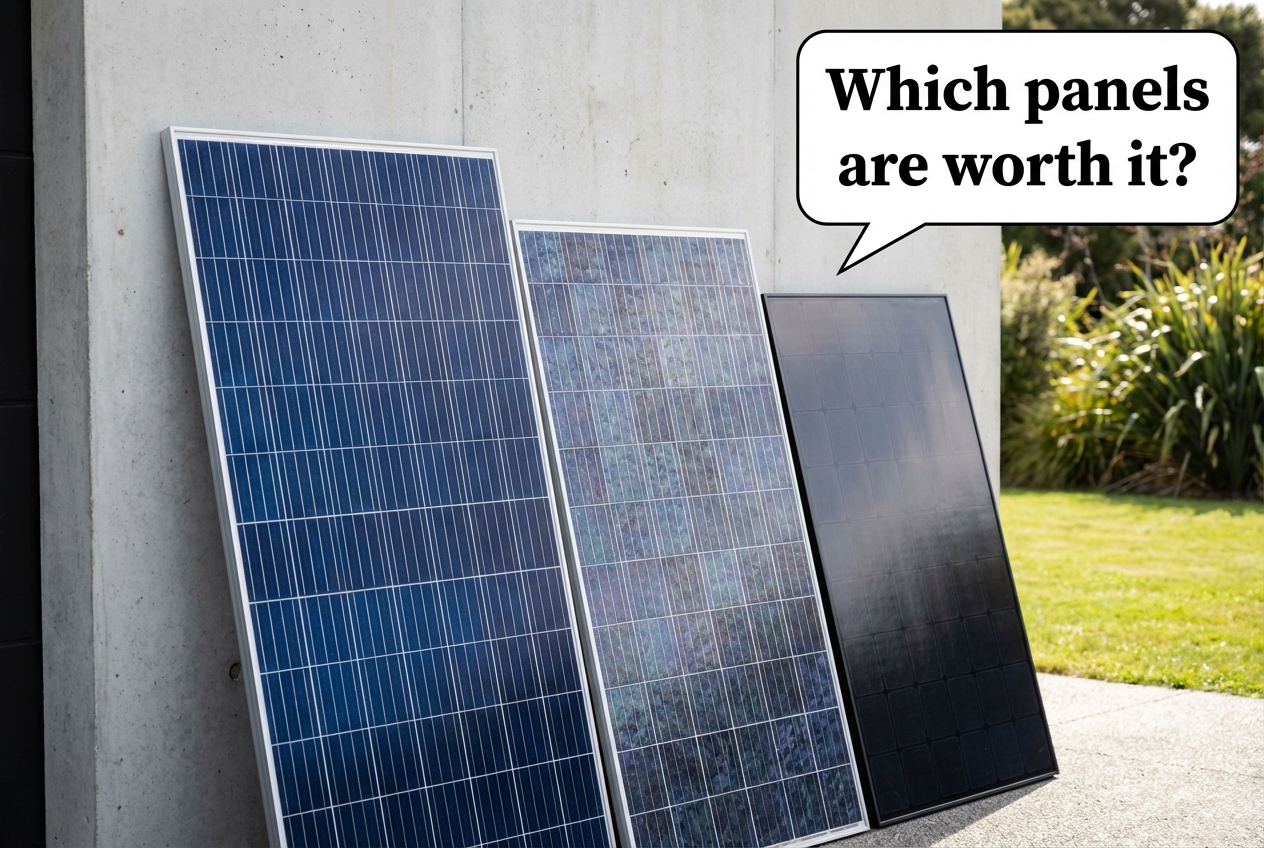
Best Solar Panels NZ: Brands, Tiers and What to Look For (2026)
Compare the best solar panels available in NZ. Tier 1 brands, specs, warranties, NZ pricing, and what installers actually use. TOPCon vs PERC vs HJT explained.
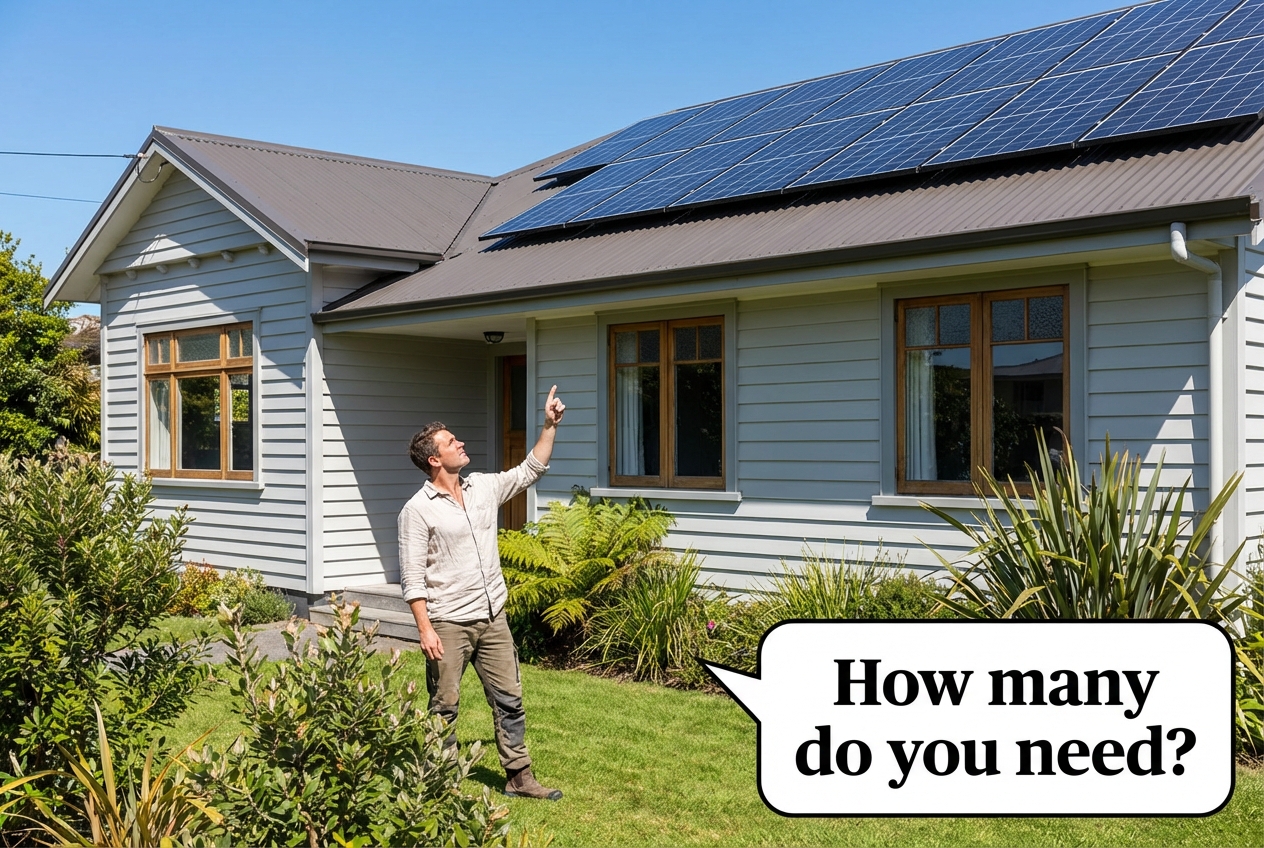
How Many Solar Panels Do I Need?
Work out how many solar panels your NZ home needs. Based on your power usage, roof space, and whether you're adding a battery or EV charger.
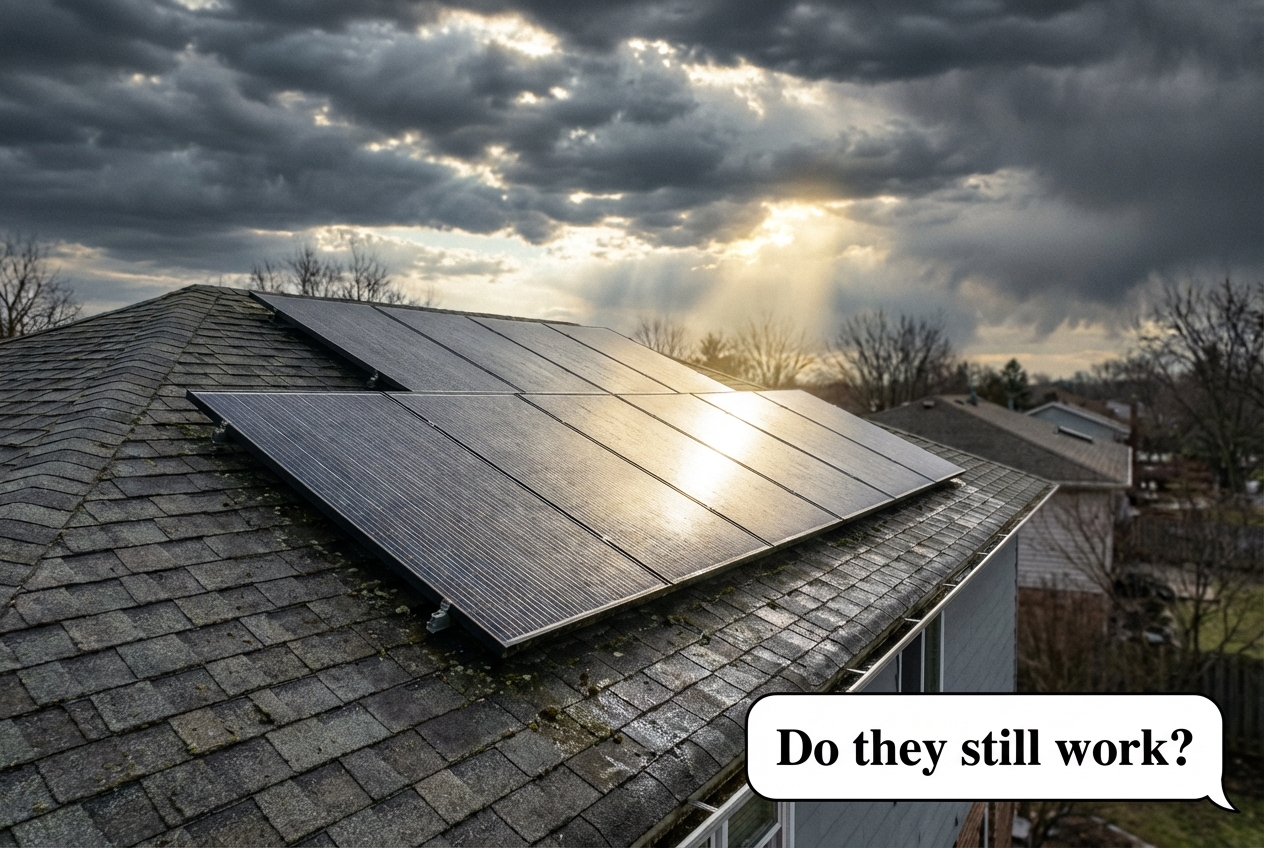
Do Solar Panels Work in Winter and on Cloudy Days in NZ?
Solar panels still generate power on cloudy days and through NZ winters. Here's exactly how much output changes and why it still works.
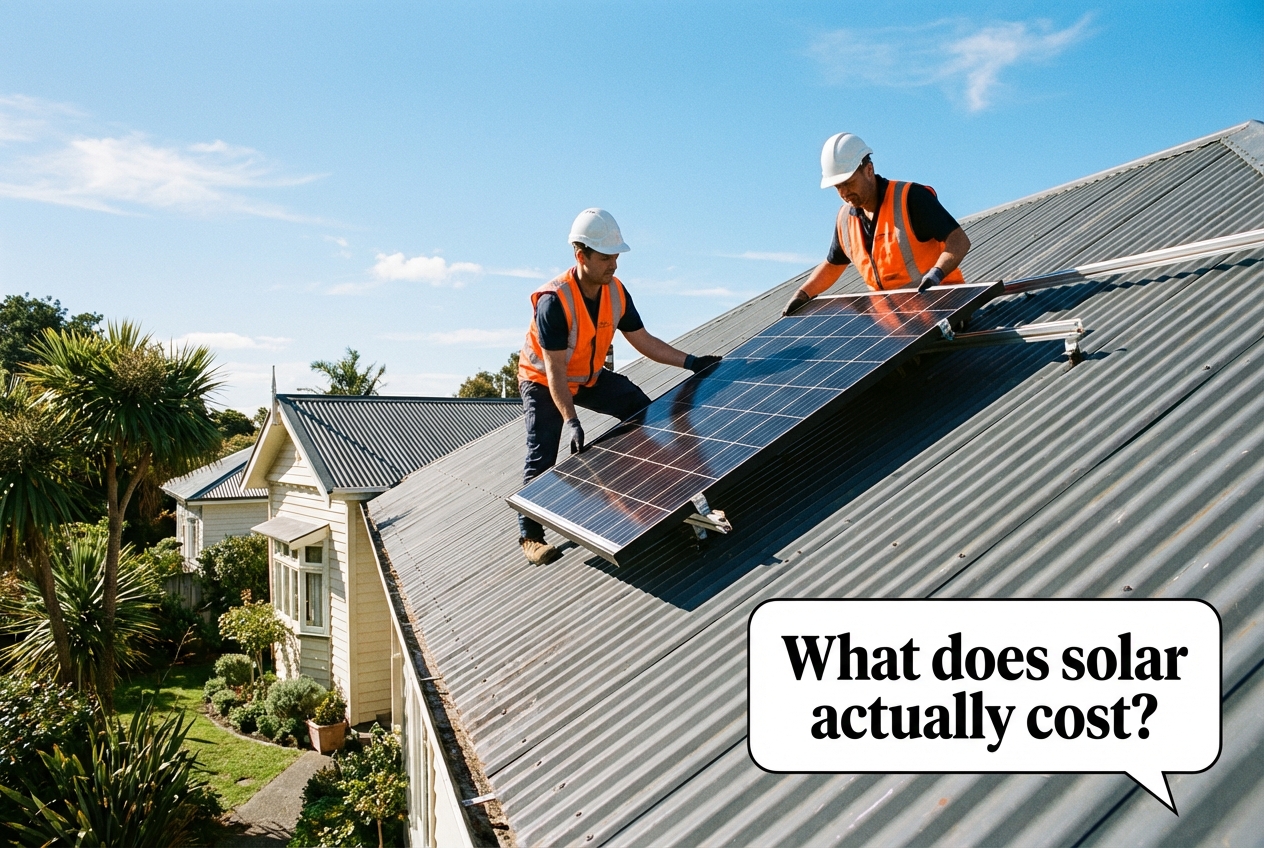
Solar Panel Costs NZ: What You'll Actually Pay in 2026
Real pricing data for NZ solar in 2026. System costs by size, what affects price, and how to tell if a quote is fair.