
Solar Battery Storage NZ: Costs, Brands, and Is It Worth It?
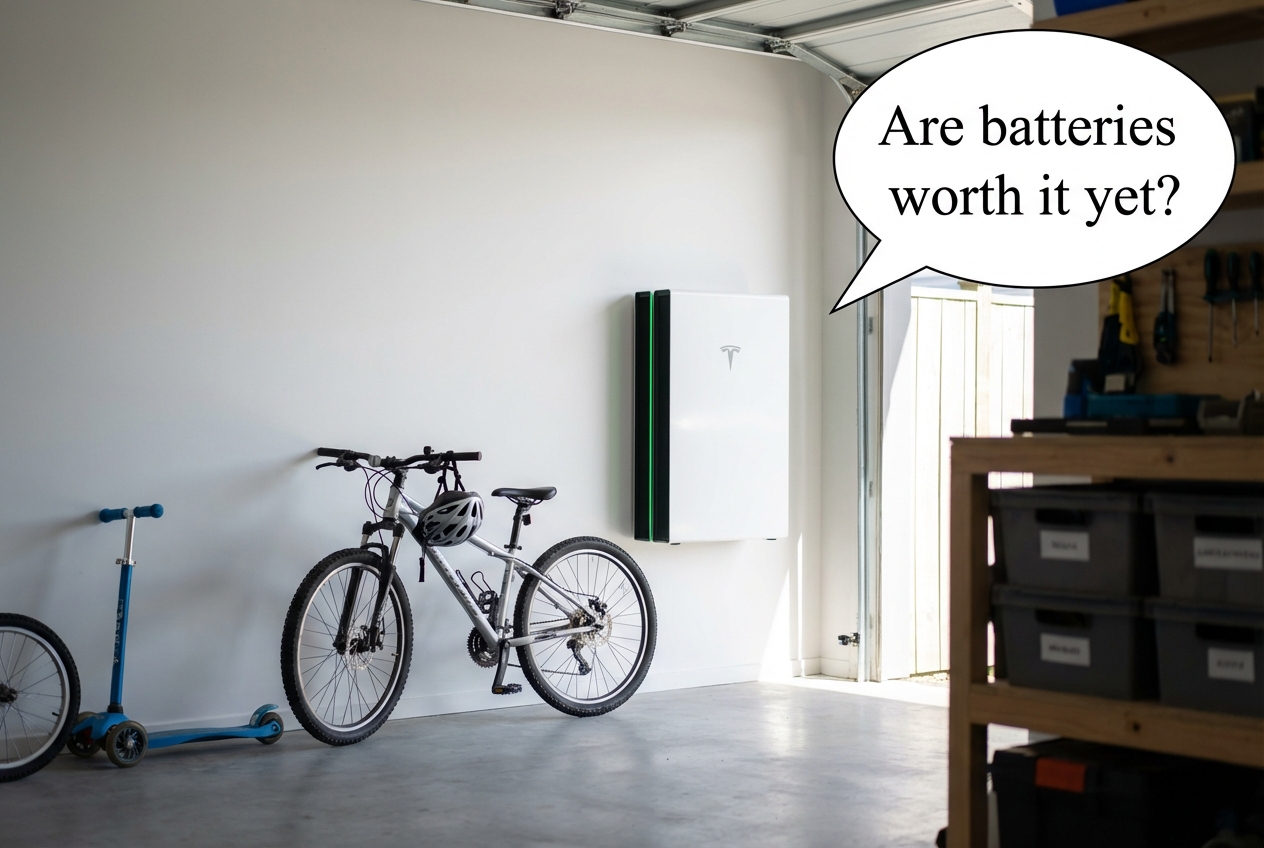
Battery storage is one of the most talked-about topics in NZ solar right now. Prices are falling, new products are launching, and homeowners want to know whether adding a battery is worth the investment. This guide covers everything: pricing, sizing, brands, the honest payback maths, and when it makes sense to buy.
Want a personalised battery recommendation for your home? Take the free SolarScout quiz and get matched with vetted installers in your area.
Key takeaways
- A Tesla Powerwall 3 costs $14,000 to $16,000 installed. BYD starts from $8,000. Expansion packs drop costs dramatically.
- Solar without a battery has the fastest payback (6 to 8 years). Adding a battery extends that to 7 to 10 years.
- Batteries make the most sense if you have high evening usage, time-of-use pricing, or you value blackout protection.
- For most Kiwi homes, the sweet spot is 10 to 13.5 kWh of storage, enough to cover a typical evening and overnight.
- Battery prices are falling 10 to 15% per year. If your solar system works well without one, waiting is a valid strategy.
How Solar Batteries Work (Simple Explanation)
Here's the basic idea. Your solar panels produce the most electricity in the middle of the day, usually between 10am and 3pm. But you're probably not home using much power during those hours. Without a battery, that surplus goes to the grid and you get a buy-back credit of around 12 to 17c per kWh.
With a battery, that surplus charges your battery instead. Then in the evening, when you're cooking dinner, running the heat pump, and watching TV, your home draws from the battery rather than the grid. You avoid buying power at 30 to 38c per kWh and use your own stored solar instead, which effectively costs you nothing at that point.
The battery sits on your wall (usually in the garage) and the whole process is automatic. Your inverter manages the flow: panels to house first, then to battery, then to grid. At night, battery to house first, then grid fills the gap.
Think of it like a water tank for electricity. Solar fills it during the day. Your house drains it at night.
Most home batteries use lithium iron phosphate (LFP) chemistry today. It's the same technology used in modern EVs, chosen for its long cycle life, thermal stability, and resistance to degradation. You'll sometimes see it called LiFePO4.
Battery Prices in NZ (2026 Comparison)
Battery pricing in New Zealand is higher than you'll see quoted overseas, mainly because of freight, installer margins, and our smaller market. Here's what you'll actually pay, installed, as of early 2026.
| Product | Capacity | NZ Price (installed) | $/kWh |
|---|---|---|---|
| Tesla Powerwall 3 | 13.5 kWh | $14,000 - $16,000 | $1,037 - $1,185 |
| Tesla Powerwall 3 Expansion | 13.5 kWh add-on | $5,900 - $6,000 | $437 - $444 |
| BYD Battery-Box | 5 - 12.8 kWh | $8,000 - $20,000+ | $800 - $1,200 |
| Enphase IQ Battery | 5 / 10 kWh | Premium | $1,200+ |
| Sungrow | Various | Competitive | $800 - $1,000 |
These prices include the battery unit, any required inverter hardware, installation labour, and electrical certification. GST is included. Some installers bundle the battery with a new solar system at a better rate than adding it standalone.
The standout figure in that table is the Powerwall 3 Expansion pack at $437 to $444 per kWh. That's because you're only buying the battery module itself. The first Powerwall 3 includes the integrated inverter, which is where most of the cost sits.
Tesla Powerwall 3: The Benchmark
The Tesla Powerwall 3 is the most recognised home battery in New Zealand, and for good reason. At 13.5 kWh usable capacity, it covers a full evening and overnight for most households. The integrated inverter means you don't need a separate solar inverter, which simplifies installation and reduces total system cost.
What you get
- 13.5 kWh usable storage capacity
- Built-in solar inverter (handles up to 11.5 kW of panels)
- Automatic backup during power cuts (islanding capable)
- Tesla app with real-time monitoring and control
- 10-year warranty with unlimited cycles
- Weather-rated for outdoor installation
The expansion trick
Here's where it gets interesting. Once you have a Powerwall 3, adding a second unit costs only $5,900 to $6,000 because you're adding the battery module alone, no extra inverter needed. That gives you 27 kWh of total storage for roughly $20,000 to $22,000. For a large household or one with an EV, that's a strong setup.
The catch
Tesla's NZ supply can be inconsistent. Wait times have ranged from 2 weeks to 3 months depending on stock. You'll also need a Tesla-certified installer, which limits your options compared to other brands. And at $14,000 to $16,000 for the first unit, it's not the cheapest entry point.
The Powerwall 3 is the benchmark product. Other brands compete on price or flexibility, but Tesla set the standard for integrated home battery design.
BYD, Enphase, and Sungrow Alternatives
BYD Battery-Box
BYD is the world's largest battery manufacturer (they also make EVs), and their Battery-Box range is popular with NZ installers for good reason. The modular design lets you start small (5 kWh) and add capacity later.
The 2025 models use BYD's Blade Battery technology, which offers 49.9% more energy density than the previous HVM series. That means a physically smaller unit for the same storage capacity, and improved thermal safety. Pricing starts around $8,000 for a 5 kWh unit, scaling up to $20,000+ for larger configurations.
BYD pairs with most major inverter brands (Fronius, SMA, Goodwe, Sungrow), so your installer has flexibility. It's a solid choice if you want to start with a smaller battery and expand over time.
Enphase IQ Battery
Enphase takes a different approach. Their IQ Battery is designed to work as part of an all-Enphase system: Enphase microinverters on the panels, Enphase battery, Enphase monitoring. If you already have Enphase microinverters, this is the natural pairing.
The downside? Premium pricing. You're paying $1,200+ per kWh, and the system really only makes sense if you're committed to the Enphase ecosystem. For a new install where you're starting from scratch, there are more cost-effective options.
Sungrow
Sungrow is one of the world's largest inverter manufacturers and their battery range is gaining traction in NZ. They offer strong value at $800 to $1,000 per kWh, which makes them attractive for homeowners focused on the financial return.
Sungrow's hybrid inverters pair natively with their batteries, and the monitoring app has improved significantly. They're not as well-known as Tesla among homeowners, but installers rate them highly for reliability and ease of installation.
Are Batteries Worth It? The Honest Maths
This is the question everyone asks, and the honest answer is: it depends on what you're optimising for. Let's look at the numbers without the marketing spin.
The case for batteries
- Grid power costs 30 to 38c/kWh in most parts of NZ. Every kWh you pull from your battery instead of the grid saves you that full amount. Stored solar effectively costs $0 to use.
- Time-of-use plans are emerging. Octopus Energy's Peaker plan pays 23c/kWh for exports during peak hours. With a battery, you can strategically export when rates are highest.
- Blackout protection has real value. If you live in an area with frequent outages (Coromandel, rural Bay of Plenty, parts of Northland), having backup power isn't a luxury.
- Battery prices keep falling. The trend is 10 to 15% cost reduction per year globally. Products available now are significantly cheaper than two years ago.
- July 2026 regulatory changes may improve the economics of battery arbitrage by updating how distributed generation is compensated.
The case against (for now)
- Solar without battery pays back fastest: 6 to 8 years. That extra $14,000 to $16,000 for a battery extends your total payback to 7 to 10 years for a combined system.
- Battery-only retrofit payback is 10 to 15 years. If you already have solar and are adding a battery to an existing system, the economics are harder to justify on savings alone.
- Buy-back rates of 12 to 17c/kWh already give you decent revenue for exported power. You're not losing everything without a battery.
- That capital could buy more panels instead. An extra $14,000 spent on panels generates more total energy over 25 years than a battery that degrades over 10 to 15 years.
- Batteries degrade. After 10 years, expect 70 to 80% of original capacity. After 15 years, you may need a replacement. Panels, by contrast, still produce at 85%+ after 25 years.
If you're purely chasing the fastest financial return, solar without a battery wins. Batteries add value through energy independence, backup power, and future-proofing, but they're not a slam-dunk investment for everyone yet.
A worked example
Take a typical Auckland household paying $250/month for power. A 6.6 kW solar system ($13,000 to $15,000) cuts that bill by around $1,800 per year. Payback: roughly 7 to 8 years.
Now add a 13.5 kWh battery ($14,000 to $16,000). Total system cost: $27,000 to $31,000. The battery saves you an additional $600 to $900 per year by shifting evening usage off the grid. Combined savings: $2,400 to $2,700 per year. Payback for the full system: roughly 10 to 13 years.
The battery itself, in isolation, pays back in 15 to 22 years at current rates. That's longer than most battery warranties. This is why we say the economics are "close but not quite there" for many households.
Battery Sizing: How Big Do You Need?
The right battery size depends on how much power you use in the evening and overnight, not your total daily usage. During the day your panels handle the load directly.
| Household | Battery Size | What It Covers |
|---|---|---|
| Small (1-2 people) | 5 kWh | Evening essentials: lights, fridge, Wi-Fi, TV |
| Average (3-4 people) | 10 - 13.5 kWh | Most evening and overnight usage covered |
| Large / EV owners | 20 - 27 kWh | Two battery units, full overnight + EV top-up |
A common mistake is buying too much battery. If your evening usage is only 8 kWh, a 13.5 kWh battery will rarely be fully used. You'd be paying for capacity that sits idle. A 10 kWh unit might be the smarter choice.
How to check your evening usage
Most power companies show hourly usage data in their app or online portal. Look at your consumption between 5pm and 7am. In summer, that might be 6 to 10 kWh. In winter, it could be 12 to 18 kWh (heat pumps make a big difference).
Size your battery for a typical shoulder-season evening, not the worst winter night. The grid is there as a backup, and oversizing wastes money.
EV owners: think bigger
If you're charging an EV at home, add roughly 7 to 10 kWh per night on top of your household usage. A single 13.5 kWh battery won't cover the house and the car. This is where a Powerwall 3 plus expansion (27 kWh total) or a large BYD configuration makes sense.
Size for your typical evening, not your worst winter night. The grid is always there as backup. Oversizing wastes money.
Hybrid vs AC-Coupled: What's the Difference?
This is one of the first decisions your installer will help you with, and it mostly comes down to whether you already have solar.
Hybrid inverter (new installs)
A hybrid inverter manages both your solar panels and your battery in one unit. It converts DC power from the panels, charges the battery, and feeds your home or the grid. Because there's only one conversion step, it's more efficient (typically 95 to 97% round-trip efficiency).
- Best for new solar-plus-battery installations
- Single inverter handles everything
- Lower total cost and higher efficiency
- Simpler installation and fewer components
AC-coupled (retrofits)
If you already have a solar system with a working inverter, an AC-coupled battery adds a separate battery inverter to your switchboard. Your existing solar inverter keeps doing its job, and the battery inverter manages the storage side.
- Best for adding battery to an existing solar system
- Works with any brand of existing solar inverter
- Slightly lower efficiency (90 to 95% round-trip) due to double conversion
- Higher cost ($2,000 to $4,000 more) because of extra inverter hardware
If you're installing solar and battery at the same time, go hybrid. If you're adding a battery to solar you installed a few years ago, AC-coupled is the practical route. Don't rip out a working inverter just to go hybrid.
Blackout Protection: How It Works
One of the most compelling reasons to get a battery has nothing to do with saving money. It's about keeping the lights on when the grid goes down.
During a power cut, a standard grid-tied solar system shuts down. That's a safety requirement. Without a battery with backup capability, your panels sit there doing nothing while you're in the dark. Frustrating, right?
How backup batteries handle it
A backup-capable battery (like the Tesla Powerwall 3) detects the grid outage within milliseconds and automatically disconnects your home from the grid. This is called "islanding." Your home becomes its own little power grid, running on battery power with the solar panels continuing to charge the battery during daylight.
The switchover is fast enough that most appliances don't even notice. Your fridge keeps running, your Wi-Fi stays up, and you've got lights. How long it lasts depends on your battery size and what you're running.
What to know before buying for backup
- Not all batteries include backup capability. Some require extra hardware (a backup gateway or transfer switch) at additional cost.
- Whole-home backup drains the battery faster. Many installers set up "essential circuits" so only critical items (fridge, lights, internet, medical devices) run during an outage.
- A 13.5 kWh battery on essential circuits can last 12 to 24 hours in a blackout, longer if the sun is shining and recharging during the day.
- If backup power is your main motivation, make sure it's specified in your quote. It affects how the system is wired.
If you live in an area with frequent outages, backup power alone can justify the battery investment. Ask your installer about islanding capability before you buy.
When to Add a Battery (Now vs Later)
The "should I wait?" question comes up constantly, and it's a fair one. Here's how to think about it.
Add a battery now if...
- You're installing a new solar system and can bundle the battery for a better price (shared installation costs, single inverter).
- You have high evening usage and a time-of-use electricity plan that rewards self-consumption.
- You experience frequent power outages and need reliable backup.
- Energy independence matters to you, and you're comfortable with a longer payback period.
Wait if...
- You already have solar that's working well, and your buy-back rate gives you reasonable value for exports.
- You're primarily motivated by financial returns and want the best $/kWh ratio. Prices are still falling.
- You're on a flat-rate electricity plan with no time-of-use benefit. The financial case for a battery is weaker.
- Your current inverter is a standard string inverter and you'd need the more expensive AC-coupled setup.
One practical tip: if you're going solar now but not sure about a battery yet, ask your installer to fit a "battery-ready" hybrid inverter. It costs a little more upfront but means you can add a battery later without replacing the inverter. That's the best of both worlds.
Installing solar now with a battery-ready inverter is the smart hedge. You get the fast payback of solar alone, with the option to add storage when prices drop further.
What to Do Next
If you're considering a battery as part of a new solar installation, or as an add-on to an existing system, the next step is getting quotes from vetted installers who can assess your specific situation. Your roof, usage pattern, and electricity plan all affect the recommendation.
SolarScout's free quiz takes about 3 minutes and matches you with installers in your area who are experienced with battery systems. You'll get personalised quotes that include both solar-only and solar-plus-battery options so you can compare.
Next steps for your solar journey
Frequently Asked Questions
How long do solar batteries last in NZ?
Most home batteries are warranted for 10 years and rated for 6,000 to 10,000 charge cycles. In practice, you can expect 10 to 15 years of useful life. After that, the battery still works but holds less charge, similar to an old phone battery. Budget for a replacement around year 12 to 15.
Can I add a battery to my existing solar system?
Yes, this is called an AC-coupled retrofit. A separate battery inverter connects to your switchboard alongside your existing solar inverter. It works with any brand of panels. Expect to pay $2,000 to $4,000 more than a hybrid setup because of the extra inverter hardware.
Do I need a battery to have solar panels?
No. Most NZ solar homes don't have a battery yet. Without one, excess solar goes to the grid and you get a buy-back credit (typically 12 to 17c/kWh). Solar without battery has the fastest payback period, usually 6 to 8 years.
Will a solar battery power my house during a blackout?
Only if your system includes backup capability. Some batteries (like the Tesla Powerwall 3) can automatically disconnect from the grid and power your home. Others need additional hardware or a specific inverter configuration. Ask your installer about "islanding" capability before you buy.
What happens to the battery when it's full?
Once your battery is fully charged, any extra solar production is exported to the grid for a buy-back credit. Your system automatically manages this. In summer, a well-sized battery will fill up by midday, so you'll still export plenty.
Are there any government subsidies for batteries in NZ?
Not specifically for batteries as of early 2026. However, green home loans from major banks (0 to 1% interest) can cover battery purchases as part of a solar installation. Some regional councils also include batteries in their sustainability lending programmes.
How much space does a home battery need?
A Tesla Powerwall 3 is about the size of a small suitcase mounted on a wall (roughly 1,100mm x 610mm x 190mm). BYD modules are similar. You'll need a sheltered spot: garage wall, side of the house, or a utility area. Batteries shouldn't be in direct sun or exposed to rain.
Is it cheaper to buy a battery now or wait?
Battery prices have been falling roughly 10 to 15% per year globally. If your solar system is already saving you good money without a battery, waiting 2 to 3 years could mean a cheaper unit with better technology. But if you value backup power or have time-of-use pricing, buying now has immediate benefits.
Written by Sarah Chen
Sarah has spent three years covering renewable energy in New Zealand, from residential rooftop systems to community solar projects. She holds a degree in Environmental Science from the University of Auckland.
Reviewed by
Matt Wilson
Registered Electrician & Solar Installer
Related guides
View all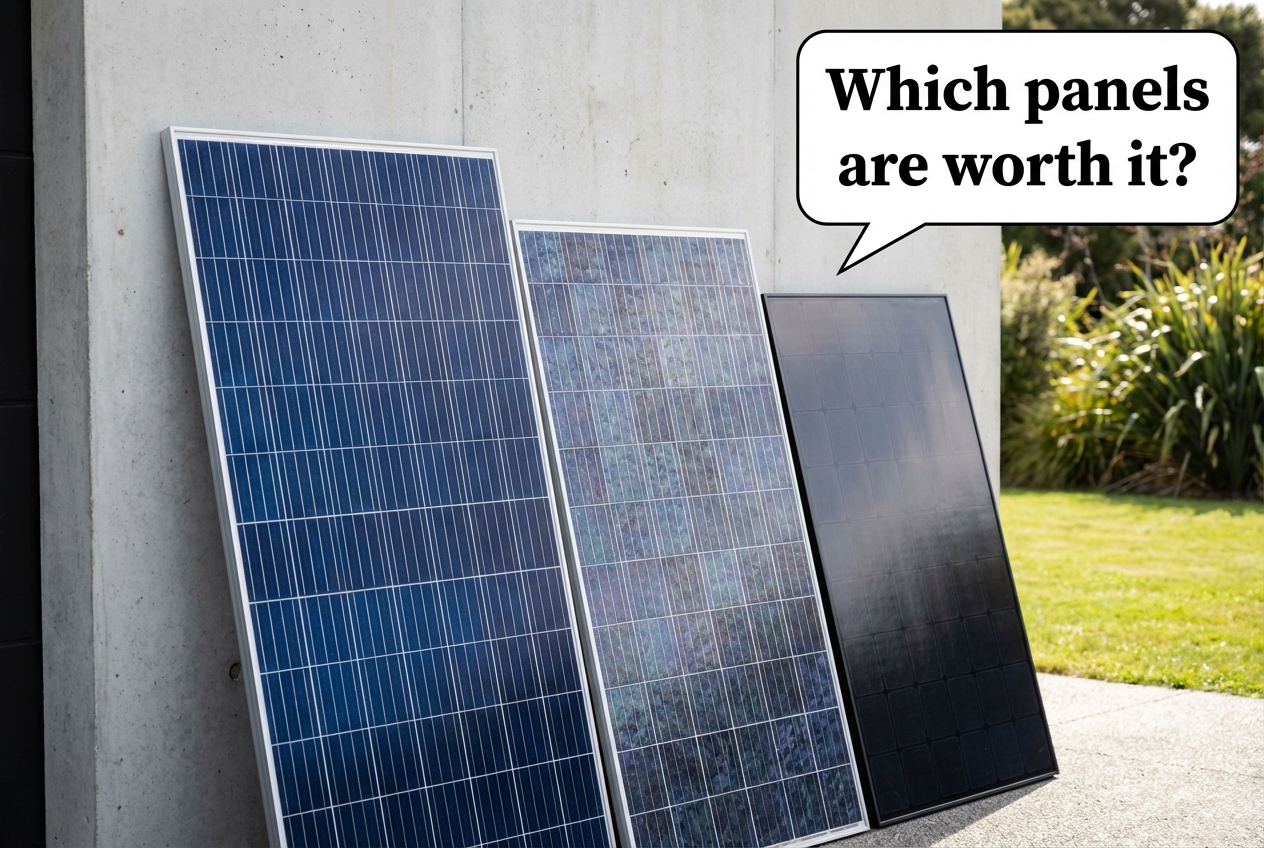
Best Solar Panels NZ: Brands, Tiers and What to Look For (2026)
Compare the best solar panels available in NZ. Tier 1 brands, specs, warranties, NZ pricing, and what installers actually use. TOPCon vs PERC vs HJT explained.
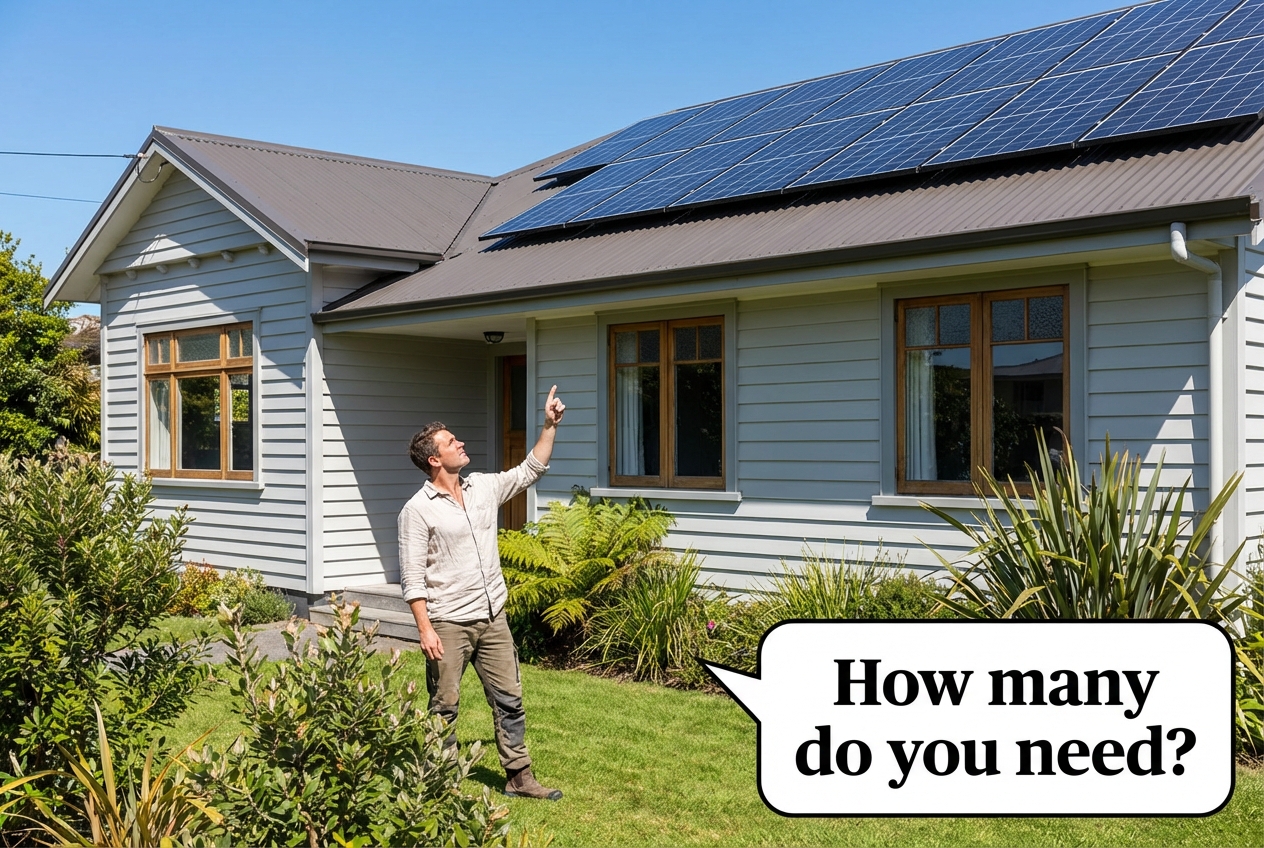
How Many Solar Panels Do I Need?
Work out how many solar panels your NZ home needs. Based on your power usage, roof space, and whether you're adding a battery or EV charger.

Is My House Suitable for Solar Panels?
Check if your NZ home is right for solar. Roof direction, pitch, shade, and structural factors explained for Kiwi houses.
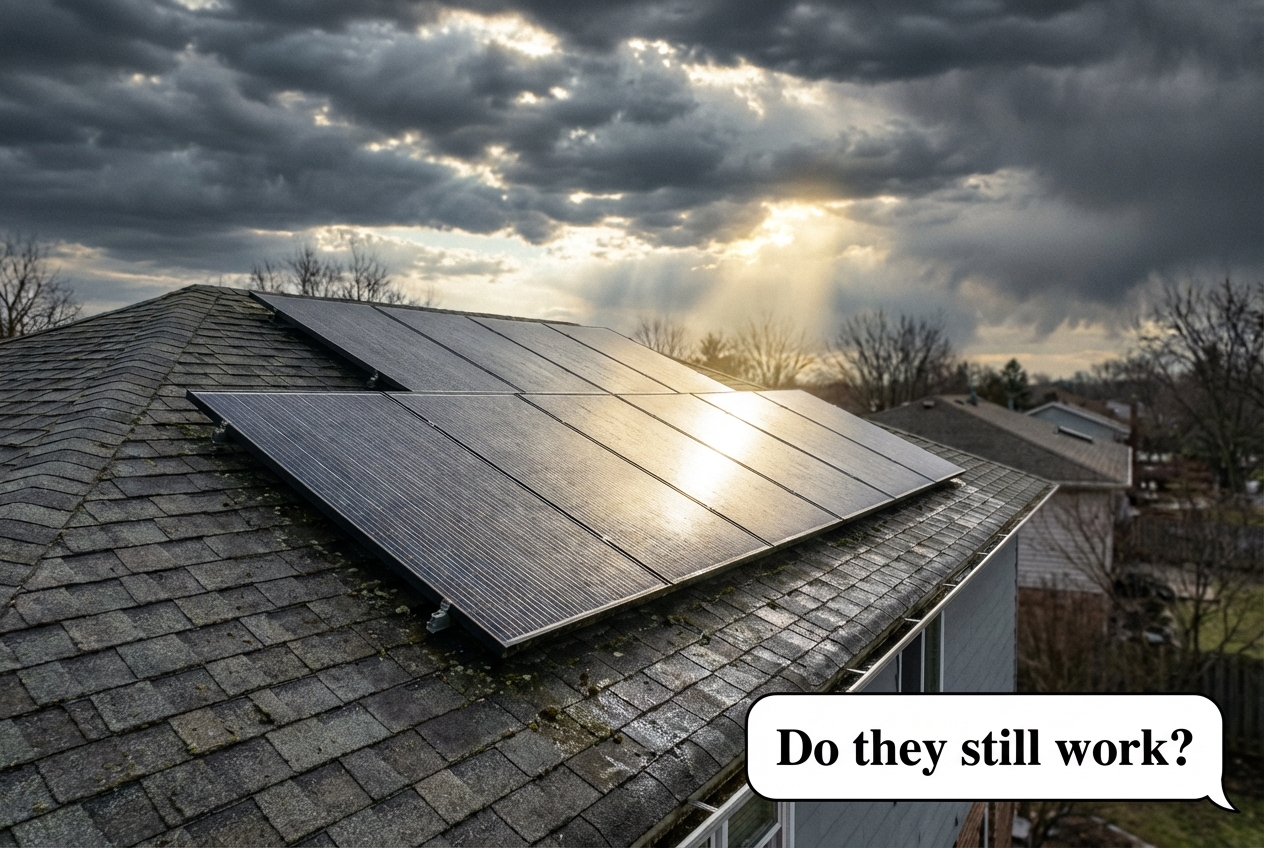
Do Solar Panels Work in Winter and on Cloudy Days in NZ?
Solar panels still generate power on cloudy days and through NZ winters. Here's exactly how much output changes and why it still works.