
Solar Panel Costs NZ: What You'll Actually Pay in 2026
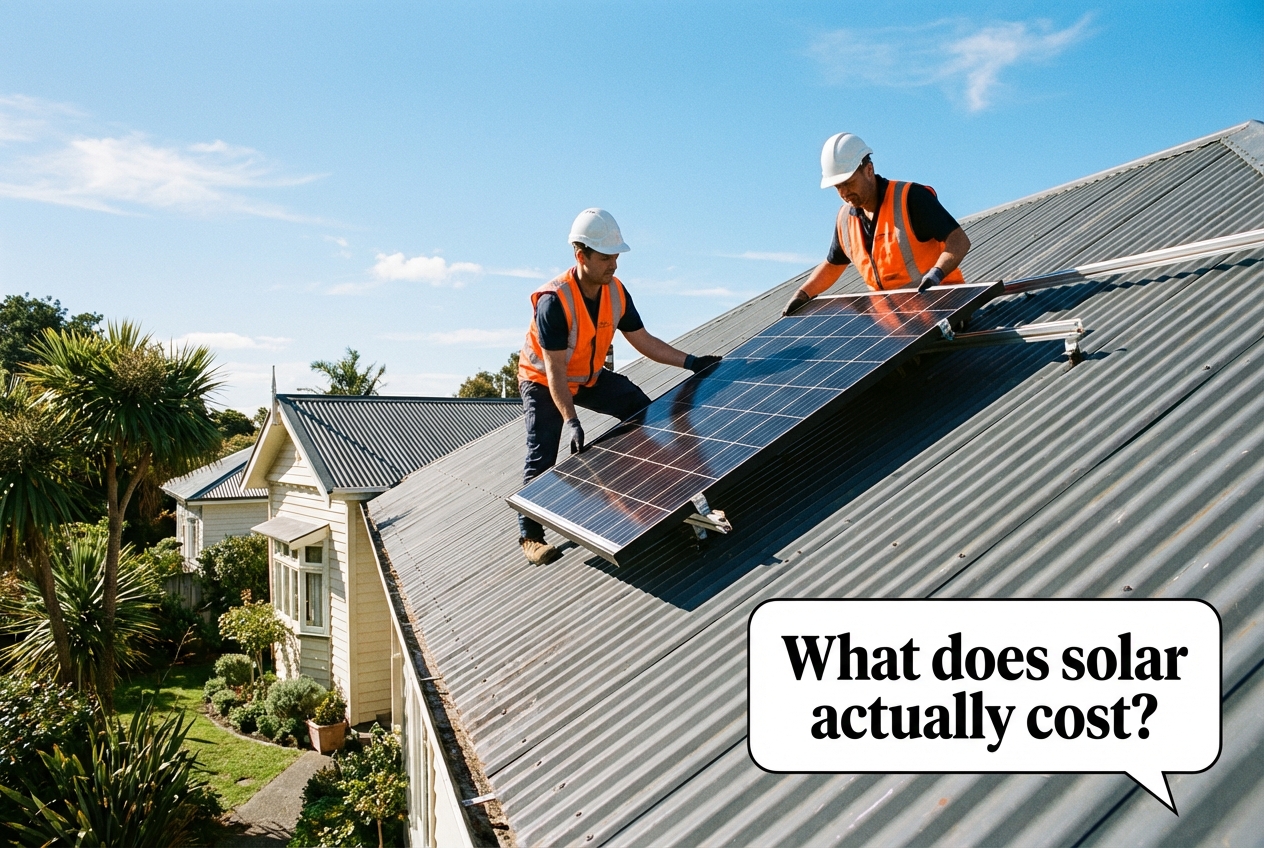
Solar panels in New Zealand cost between $8,000 and $30,000 depending on system size. The average Kiwi home installs around 7.9 kW, costing $13,000 to $18,000 fully installed. At $1.70 to $2.00 per watt, you’re in the sweet spot for quality Tier 1 equipment. Payback is typically 6 to 8 years without a battery, with 20+ years of savings after that.
PS We connect you with vetted solar installers across NZ. Answer a few quick questions, get your personalised estimate, and compare quotes from trusted local companies.
Key Takeaways
- A 6.6 kW system (most popular size) costs $13,000 to $15,000 fully installed including GST.
- The best price-check metric is cost per watt ($/W). Aim for $1.70 to $2.00/W for Tier 1 equipment.
- Roof complexity, electrical upgrades, and property access are the biggest variables that push prices up or down.
- NZ bank green loans offer 0 to 1% interest rates, but you must use a SEANZ member installer to qualify.
- Building consent is no longer needed for most residential installs since October 2025, saving $1,000 to $2,000 and several weeks of waiting.
Solar Panel Prices by System Size
Let’s start with the question everyone Googles first: how much will I actually pay? The table below shows fully installed prices including GST, panels, inverter, mounting, wiring, and labour. These are 2026 figures based on quotes from SEANZ member installers across New Zealand.
| System Size | Price Range (installed, incl. GST) |
|---|---|
| 3 kW | $8,000 - $10,000 |
| 5 kW | $11,000 - $13,000 |
| 6.6 kWMost popular | $13,000 - $15,000 |
| 8 kW | $15,000 - $18,000 |
| 10 kW | $15,000 - $18,000 |
| 13 kW+ | $20,000 - $30,000 |
A few things to note. The 8 kW and 10 kW systems overlap in price because the jump from 8 to 10 kW often only requires a couple more panels rather than a bigger inverter. If your roof has room, upsizing from 8 to 10 kW can be one of the best value moves you’ll make.
The average system size installed in NZ in 2026 is around 7.9 kW. That’s up from roughly 5 kW a few years ago, and the trend makes sense. Panels have gotten cheaper, power prices keep climbing, and more households are planning for EVs and heat pumps.
The sweet spot for most NZ homes is 6.6 to 10 kW. Big enough to cover daytime usage, small enough to keep costs under $18,000.
If you’re on a tighter budget, a 5 kW system still makes a meaningful dent in your power bill. You can always add more panels later, although it’s usually cheaper to go bigger upfront. Adding panels after the initial install means a second round of scaffolding, labour, and potentially upgrading your inverter.
How to Know if You're Getting a Fair Price
Comparing solar quotes can feel like comparing apples with oranges. One installer gives you a 6.6 kW system for $13,500, another quotes $16,000 for what looks like the same thing. The simplest way to cut through it is to calculate the cost per watt.
Take your total quoted price (including GST) and divide it by the system size in watts. A $14,000 quote for a 6,600W system comes out to $2.12 per watt. That puts you in the premium bracket, which is fine if the equipment matches, but worth questioning if they’re using budget panels.
Price per watt benchmark
| Price Range | What It Means |
|---|---|
| Under $1.40/W | Unusually cheap. Check panel quality and warranty terms. |
| $1.40 - $1.70/W | Good value. Typically budget-tier panels with standard inverter. |
| $1.70 - $2.00/W | Recommended range. Quality Tier 1 panels, reputable inverter. |
| $2.00 - $2.30/W | Premium pricing. Top-tier equipment or complex installation. |
| Over $2.30/W | High. Ask the installer what justifies the premium. |
Keep in mind that $/W should be compared across similar system sizes. Smaller systems naturally have a higher $/W because the fixed costs (scaffolding, electrical connection, labour mobilisation) are spread across fewer panels. A 3 kW system at $2.50/W isn’t necessarily a rip-off. A 10 kW system at $2.50/W probably is.
Also check what’s included. A quote at $1.80/W with Jinko Tiger Neo panels and a Fronius inverter is much better value than a quote at $1.70/W that doesn’t specify brands. If a quote says “premium panels included” without naming a brand and model, treat that as a red flag.
What's Included in a Solar Quote
A properly detailed solar quote should give you clarity on exactly what you’re paying for. If the quote you receive is a single line item that says “6.6 kW solar system - $14,500”, ask for a breakdown. Here’s what a good quote includes.
Where your money goes
Before we look at what should appear on the quote document, here’s how the total cost typically breaks down for a standard residential install:
| Component | Share of Total Cost |
|---|---|
| Panels | 35-40% |
| Inverter | 15-20% |
| Mounting hardware | ~10% |
| Electrical work | 10-15% |
| Labour and installation | 15-20% |
Panels are the biggest single cost, but installation labour and electrical work combined often match or exceed the panel cost itself. That’s why you can’t just compare panel prices between quotes. The installation quality matters just as much.
What should appear on the quote
- Panels: Brand, model, wattage per panel, quantity, and product warranty (should be 25+ years performance warranty)
- Inverter: Brand, model, size, and warranty (should be 10 to 15 years). Common brands: Fronius (most popular in NZ), Enphase, SolarEdge, Sungrow
- Mounting system: Type (flush mount, tilt frame), material, warranty
- Installation: Labour, electrical work, any scaffolding or access requirements clearly stated
- Approvals: Network connection application, and building consent if required for your property
- Workmanship warranty: Separate from the manufacturer warranties, this covers the installation itself (5 to 10 years is standard)
- Timeline: Expected installation date and how long the job takes (usually 1 to 2 days for residential)
- Exclusions: What’s NOT included. Common exclusions are meter changes, tree removal, switchboard upgrades, and Wi-Fi bridging for monitoring
If any of these are missing from a quote you’ve received, ask the installer to add them before you compare. You need like-for-like information to make a sensible decision.
What Makes a System Cost More (or Less)
Two homes on the same street can get quotes thousands of dollars apart. That’s not because one installer is ripping you off. Site-specific factors make a real difference to the final price.
What pushes the price up
- Roof complexity (+$500 to $3,000): Multi-level roofs need scaffolding. Steep pitches (over 30 degrees) require extra safety equipment. Tile roofs take longer than metal. Split arrays across multiple roof faces mean more wiring and potentially optimisers. And if your roof contains asbestos materials, specialist handling adds significant cost.
- Electrical upgrades (+$500 to $2,000): If your switchboard is full or outdated, it’ll need upgrading before solar can connect. Long cable runs from roof to switchboard also add cost. Meter replacement is usually handled by your power company at no charge, but check this with your installer.
- Property access (+$300 to $1,500): Difficult vehicle access, inner-city parking restrictions, or long distances from road to house all add time and cost to the install.
- Premium equipment (+$1,000 to $4,000): High-efficiency panels like REC Alpha or Q Cells cost more than standard Tier 1 panels. Microinverters (like Enphase) cost more than a single string inverter but offer panel-level monitoring and better performance with partial shading. SolarEdge optimisers sit somewhere in between.
What brings the price down
- Single-storey home with metal roof: This is the installer’s dream job. Easy access, fast mounting, no scaffolding required. It’s the baseline these prices are built around.
- North-facing roof with no shading: No need for optimisers or split arrays. A simple string inverter does the job, which is the cheapest and most reliable setup.
- Modern switchboard with available capacity: No electrical upgrades needed. The installer just connects directly.
- Good road access and close to an installer base: Less travel time and easier logistics keep the quote lean.
The cheapest install in NZ? A single-storey home, corrugated iron roof, north-facing, no shade trees, modern switchboard, and easy street access. If that sounds like your place, you’ll likely be at the lower end of the price ranges above.
How NZ Compares to Australia and the UK
If you’ve got mates across the ditch telling you they paid half what you’re being quoted, there’s a reason for that. Australia has a generous Small-scale Technology Certificates (STC) rebate that knocks $2,500 to $3,500 off the upfront cost. New Zealand has no equivalent rebate programme.
| Country | Cost per Watt | Notes |
|---|---|---|
| New Zealand | $1.70 - $2.30/W | No government rebate |
| Australia | ~$0.97 - $1.05/W | After STC rebate (~$2,500-$3,500 off) |
| United Kingdom | ~$2.15 - $3.23/W | 0% VAT on residential solar |
Before you start feeling short-changed, the comparison isn’t quite apples to apples. Australia’s STC rebate distorts the upfront cost. Their electricity is also cheaper per kWh in most states, which means the payback period isn’t necessarily shorter than ours. New Zealand has some of the most expensive residential electricity in the developed world, which actually works in solar’s favour once your system is running.
The UK pays more per watt than we do, even with their 0% VAT on residential solar. Their sunshine hours are also significantly lower than ours, so NZ homeowners get more energy per dollar spent on panels.
The bottom line: NZ solar prices are middle of the pack globally. Not the cheapest, but far from the most expensive. And our high electricity costs mean the payback is actually quite competitive.
Financing Your Solar System
You don’t need to pay cash upfront. NZ’s major banks have introduced green loan products specifically for solar, and the rates are hard to beat. Some are genuinely at 0% interest.
Bank green loans for solar
| Bank | Rate | Term | Requirement |
|---|---|---|---|
| Westpac | 0% | Up to 5 years | Must use a SEANZ member installer |
| ANZ | 1% | Up to 3 years | Must use a SEANZ member installer |
| ASB | 1% | Up to 3 years | Must use a SEANZ member installer |
| BNZ | 1% | Up to 3 years | Must use a SEANZ member installer |
The catch with every bank green loan: you must use a SEANZ (Sustainable Energy Association of New Zealand) member installer. This isn’t a bad thing. SEANZ members are vetted, carry appropriate insurance, and follow industry best practices. It’s actually a useful filter when you’re choosing an installer.
At 0% interest over five years, a $15,000 system works out to $250 per month. Many households find their monthly loan repayment is similar to (or less than) what they save on their power bill, making solar essentially cash-flow positive from day one.
At 0% interest over five years, many households find their monthly loan repayment is less than what they save on their power bill. Solar can be cash-flow positive from day one.
Other financing options
- Personal loan: If your installer isn’t a SEANZ member, you can still use a standard personal loan. Rates are typically 7 to 13% depending on your bank and credit history. Much more expensive, so a SEANZ installer is almost always the better option.
- Revolving credit / mortgage top-up: Some homeowners add the solar cost to their mortgage. The interest rate is lower (around 5 to 7%), but you’re paying it off over a longer term, which increases total interest paid.
- Cash: If you have savings, paying cash avoids any interest at all. The “return on investment” from solar (15 to 20% annually after payback) is better than most term deposits, so it’s a reasonable use of savings for many households.
Building Consent: What Changed in 2025
This is good news. Since October 2025, most residential solar installations in New Zealand no longer require a building consent. Previously, consent was needed for any installation, which added $1,000 to $2,000 in fees and several weeks of waiting time.
The new rules exempt solar installations that meet all of these criteria:
- The total panel area is under 40 square metres (roughly a 10 to 12 kW system, depending on panel efficiency)
- The property is in a standard wind zone (most of New Zealand outside exposed coastal or high-altitude areas)
- The installation is on an existing building (not a new build, where consent is already part of the overall process)
- Panels are flush-mounted or on tilt frames within certain limits
For most Kiwi homeowners, this means your install just got simpler and cheaper. Your installer should confirm whether your specific property qualifies for the exemption. If you’re in a high wind zone, heritage area, or installing an unusually large system, consent may still be required.
The consent exemption removed one of the biggest friction points in going solar. Faster installs, lower costs, less paperwork.
Quote Red Flags to Watch For
Most solar installers in NZ are honest, but the industry has grown fast and not everyone operates to the same standard. Here are the warning signs we see most often when reviewing quotes submitted to SolarScout.
Things that should make you pause
- No panel or inverter brand specified: Phrases like “premium panels included” or “top-tier inverter” without naming the actual brand and model are a red flag. You should know exactly what’s going on your roof. Look for Tier 1 panels like Jinko, LONGi, Canadian Solar, or Trina. Premium options include REC and Q Cells. For inverters, Fronius is the most widely installed in NZ, with Enphase, SolarEdge, and Sungrow also common.
- Pressure to sign immediately: “This price is only available today” is almost never true. Good installers will hold a quote for at least two to four weeks. If someone is pushing you to sign on the spot, walk away.
- No workmanship warranty: Panel and inverter warranties come from the manufacturer. But who stands behind the actual installation? A reputable installer offers a separate workmanship warranty of 5 to 10 years. If they won’t put this in writing, that’s a problem.
- Verbal promises not written down: “We’ll sort that out on the day” or “Don’t worry, we always include that” mean nothing unless it’s in the written quote. If it’s important to you, get it on paper.
- Large upfront deposits: The industry standard is 10 to 20% deposit with the balance due on completion. If someone asks for 50% upfront or full payment before installation, that’s unusual and risky. You lose your leverage if something goes wrong.
One more thing: always check that your installer is a registered electrician. In New Zealand, all electrical work (including solar connections) must be done by a registered electrician. Ask for their registration number and check it on the Electrical Workers Registration Board website.
What to Do Next
You now know more about solar pricing than most people who are already on their roof getting panels installed. Here’s how to turn that knowledge into action.
- Get your power bill handy. Your monthly spend is the single most important input for sizing your system and calculating payback.
- Get 3 quotes minimum. Prices vary, and so does the quality of the proposal. Three quotes gives you enough range to spot outliers.
- Use the $/W benchmark. Calculate cost per watt for each quote. If it is well outside the $1.70 to $2.00/W range, ask why.
- Check SEANZ membership. This unlocks green loan rates and gives you confidence in installation standards.
- Ask about the timeline. Most installs take 1 to 2 days, but scheduling lead time can be 2 to 8 weeks.
If you want to skip the quote-hunting and get matched with vetted installers in your area, that’s exactly what SolarScout does. Our quiz takes about 3 minutes and gives you a personalised recommendation based on your roof, your usage, and your budget.
Frequently Asked Questions
How much does it cost to install solar panels in NZ?
Fully installed prices range from $8,000 for a small 3 kW starter system to $30,000+ for a 13 kW+ setup. Most NZ households spend $13,000 to $18,000 for a system that covers 70 to 90% of their electricity needs. These prices include panels, inverter, mounting, electrical work, and labour.
Is it worth getting solar panels in NZ?
For most homeowners with a suitable roof, yes. A typical system pays for itself in 6 to 8 years through power bill savings of $1,500 to $2,500 per year. After payback, you’re looking at near-zero electricity costs for the remaining 17 to 19 years of the system’s warranted life. Solar also protects you against future electricity price rises, which have averaged 5 to 7% per year in NZ.
What is the payback period for solar panels in NZ?
Without a battery, payback is typically 6 to 8 years. The exact timeframe depends on your system size, how much solar you self-consume (use directly vs export), your electricity rate, and your buy-back rate. Higher self-consumption and higher electricity prices shorten the payback.
Do I need a battery with my solar panels?
Not necessarily. A battery adds $10,000 to $24,000 to your upfront cost and extends the payback by several years. Batteries make the most sense if you have time-of-use pricing, want backup power during outages, or use most of your electricity in the evening. For many households, solar without a battery provides the best return on investment. You can always add a battery later.
How long do solar panels last?
Quality solar panels are warranted to produce at least 80% of their rated output after 25 years. Real-world lifespan often exceeds 30 years. The inverter is the component most likely to need replacement first, typically after 10 to 15 years (budget $1,500 to $3,000 for this).
Can I install solar panels myself in NZ?
No. Solar installation must be completed by a registered electrician in New Zealand. The electrical work requires certification, and network companies require proof of professional installation before approving grid connection. DIY installation also voids product warranties and insurance coverage.
Do solar panels work on cloudy days?
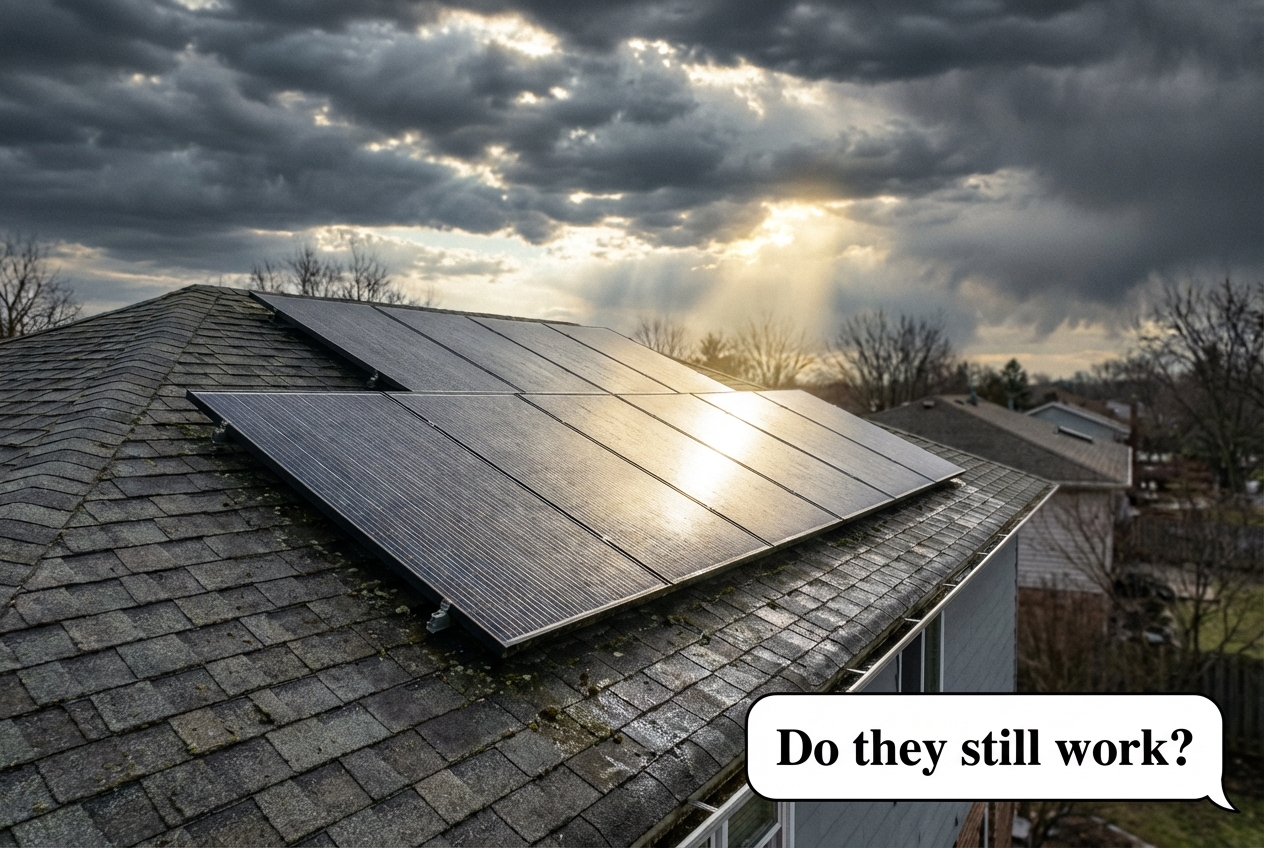
Yes, but at reduced output. Solar panels generate electricity from light, not direct sunlight. On overcast days, expect 10 to 30% of full capacity. NZ’s climate still provides excellent annual solar yields. Auckland receives similar solar radiation to parts of Germany, which has one of the world’s highest solar installations per capita.
What brands should I look for?
For panels, look for Tier 1 manufacturers: Jinko, LONGi, Canadian Solar, and Trina are all solid choices with long track records. REC and Q Cells are premium options with higher efficiency. For inverters, Fronius is the most popular in NZ, followed by Enphase (microinverters), SolarEdge, and Sungrow.
Do I need building consent for solar panels?
Since October 2025, most residential installs no longer require building consent. The exemption applies if your panel area is under 40 square metres, you’re in a standard wind zone, and panels are flush-mounted or on approved tilt frames. Your installer will confirm whether your property qualifies.
Written by Sarah Chen
Sarah has spent three years covering renewable energy in New Zealand, from residential rooftop systems to community solar projects. She holds a degree in Environmental Science from the University of Auckland.
Reviewed by
Matt Wilson
Registered Electrician & Solar Installer
Related guides
View all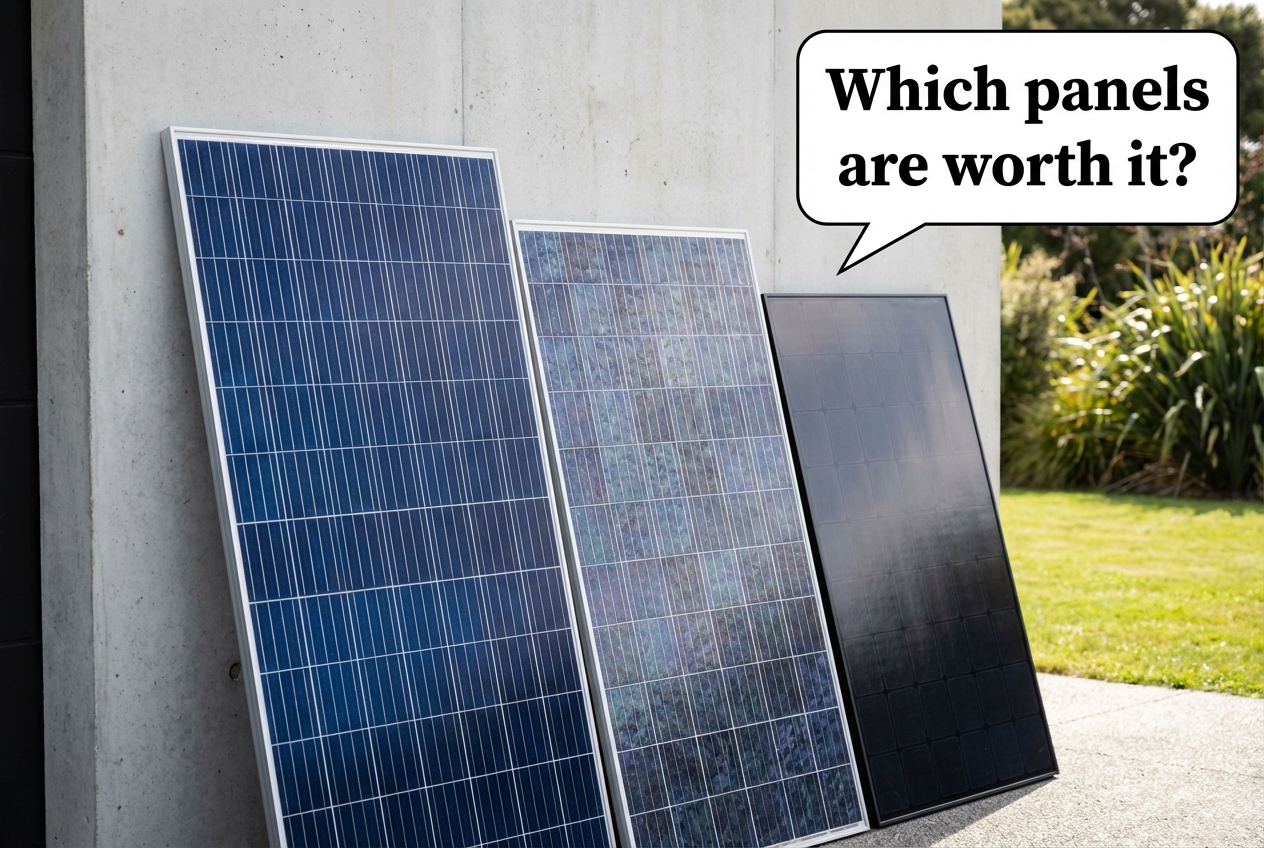
Best Solar Panels NZ: Brands, Tiers and What to Look For (2026)
Compare the best solar panels available in NZ. Tier 1 brands, specs, warranties, NZ pricing, and what installers actually use. TOPCon vs PERC vs HJT explained.
How Many Solar Panels Do I Need?
Work out how many solar panels your NZ home needs. Based on your power usage, roof space, and whether you're adding a battery or EV charger.
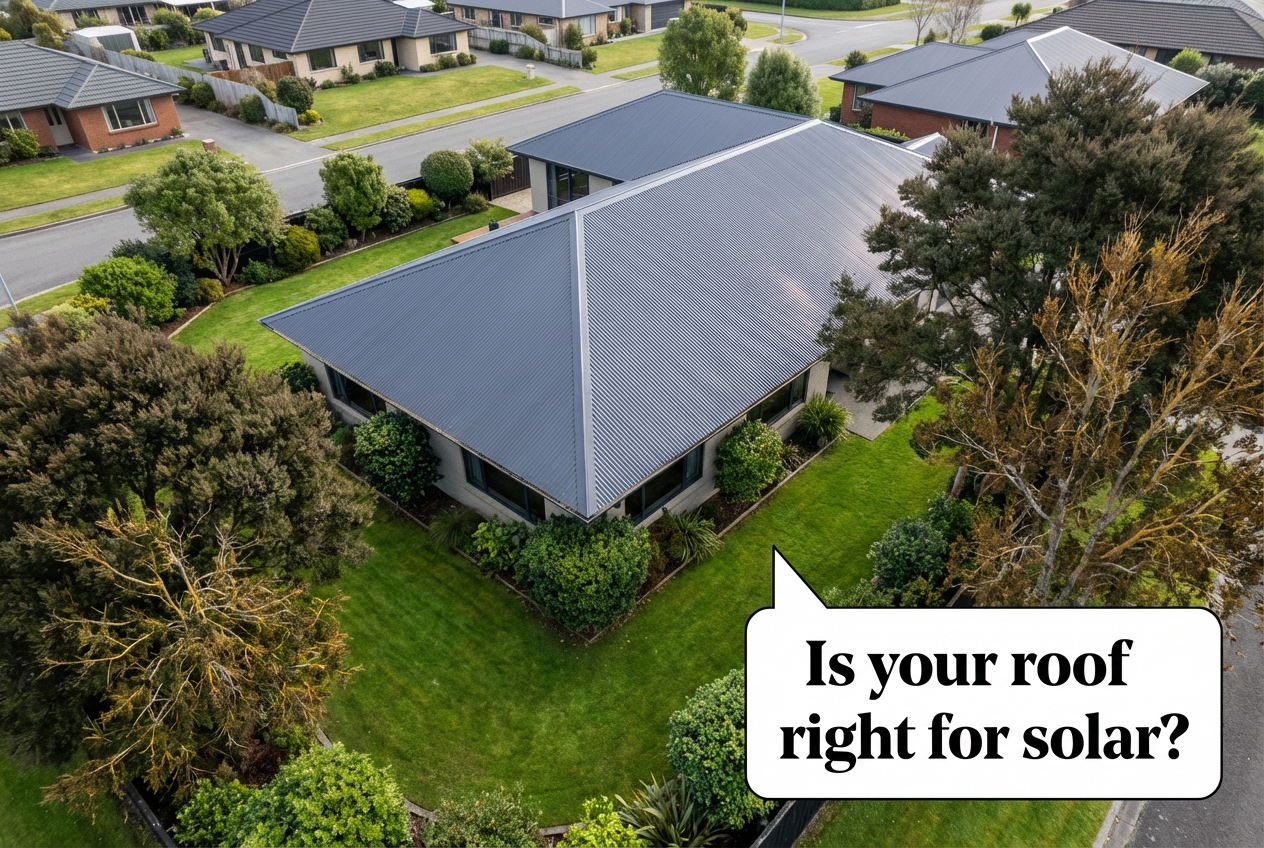
Is My House Suitable for Solar Panels?
Check if your NZ home is right for solar. Roof direction, pitch, shade, and structural factors explained for Kiwi houses.
Do Solar Panels Work in Winter and on Cloudy Days in NZ?
Solar panels still generate power on cloudy days and through NZ winters. Here's exactly how much output changes and why it still works.